When a material bends, it quietly reveals whether it’s strong, stiff, or dangerously weak. In real life, very few components experience only pure tension or compression. Beams, profiles, panels, pipes, brackets, and even small plastic parts are constantly subjected to bending loads. If the material cannot handle those loads, the result is warping, cracks, or sudden failure.
That’s exactly where flexural testing laboratory services – Kiyo R&D LAB become essential. As a NABL-accredited mechanical testing laboratory, Kiyo R&D Lab helps manufacturers, OEMs, product designers, and engineering students understand how their materials behave under bending forces. Instead of guessing how strong a material is, you get measured, repeatable, and standards-based data you can trust.
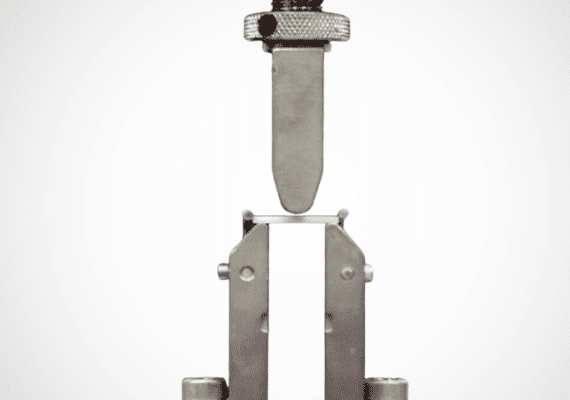
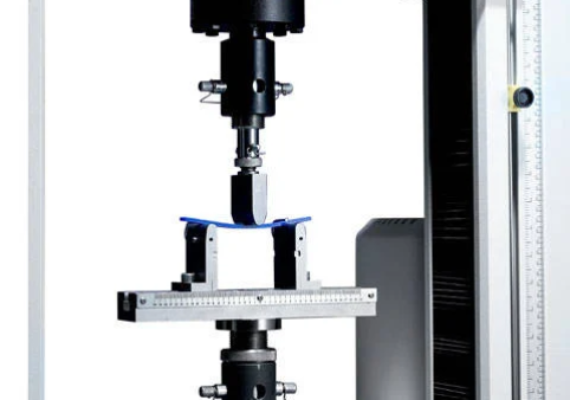
Flexural testing is a mechanical test used to determine a material’s behavior when it is subjected to bending. In a typical test, a specimen is supported at two points while a controlled load is applied at one or two points between them. As the load increases, the specimen bends until it either yields or fractures.
From this test, we primarily obtain:
These properties are critical wherever a material is used as a beam, panel, or structural element. If flexural performance is ignored, parts may survive initial testing but fail prematurely in service under sustained or cyclic bending.
The flexural testing laboratory services – Kiyo R&D LAB cover a wide range of materials used in real-world products, including:
Each material type may require slightly different specimen dimensions, span lengths and loading speeds, all chosen according to relevant standards such as ASTM D790 and ISO 178.
Bending performance is a key design parameter in many sectors. Typical users of flexural testing at Kiyo R&D Lab include:
In all these areas, flexural testing is not a luxury; it is a basic requirement if you take product safety and durability seriously.
Kiyo R&D Lab follows a systematic procedure to ensure that every flexural test is repeatable, traceable and compliant with international standards.
Test specimens are cut or machined to the exact dimensions specified by the standard method (for example, ASTM D790 or ISO 178). Consistent geometry is essential for accurate and comparable results.
The specimen is placed on a three-point or four-point bending fixture attached to a calibrated Universal Testing Machine (UTM). The span length and loading nose radius are set according to the material and standard.
A gradually increasing load is applied at a controlled crosshead speed. The machine continuously records the applied load and the corresponding deflection of the specimen.
From the load–deflection data, the software calculates:
Kiyo R&D Lab provides a detailed, NABL-compliant test report that includes test conditions, standards followed, numerical results and graphs where applicable. These reports are suitable for internal QA, supplier qualification, customer communication and academic documentation.
The results from flexural testing laboratory services – Kiyo R&D LAB are used for several critical decisions:
In short, flexural testing converts “we think it is strong enough” into “we know it is strong enough,” backed by numbers.
There are many test machines in the market, but not every setup delivers reliable results. Kiyo R&D Lab differentiates itself through:
Whether you are an established manufacturer or a student working on a final-year project, you get the same focus on accuracy, clarity, and professionalism.
Flexural performance is one of the most important indicators of how a material will behave in real structural applications. If your product bends, carries load, or is exposed to long-term stress, ignoring flexural testing is a risk you cannot afford to take.
By choosing flexural testing laboratory services – Kiyo R&D LAB, you gain access to NABL-accredited testing, advanced equipment, and technically sound reports that support smart design, reliable manufacturing, and credible academic work.
In simple terms: if you want confidence in how your material performs in bending, you need proper flexural testing—and Kiyo R&D Lab is equipped to deliver it.