Polymer and Rubber Material Testing Services

Polymer & Rubber Material Testing Services in India – NABL Certified | Kiyo R&D LAB

Introduction

Polymers and rubber materials are the silent backbone of modern engineering. They are used in automobiles, electrical components, medical devices, packaging, footwear, sealing systems, industrial machinery and everyday consumer products. Their properties determine not just the performance of a product, but also its safety, lifespan and reliability.

However, polymers and rubbers behave differently under stress, heat, load, chemicals and environmental exposure. This makes scientific testing absolutely essential before these materials are approved for production or market use.

This is where polymer and rubber material testing services in India – Kiyo R&D LAB make a major difference. As a NABL-accredited testing laboratory in Chennai, Kiyo R&D Lab provides a comprehensive suite of mechanical, thermal and physical tests to ensure that every material grade is validated with precise, industry-standard data.
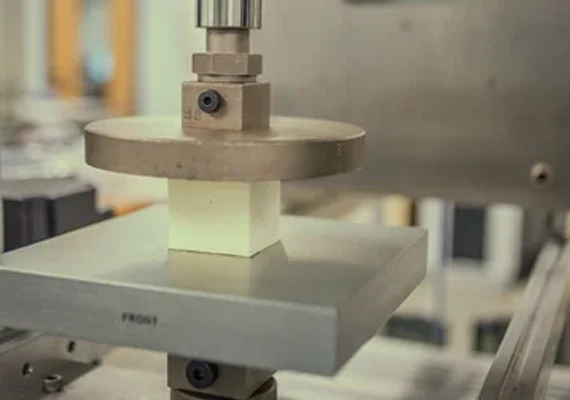
Ultimate Polymer and Rubber Material Testing Services in India – Kiyo R&D LAB (NABL Certified)

Why Polymer and Rubber Testing Is Essential

Polymers and rubbers are versatile, but they can also be unpredictable if not properly analyzed. Their mechanical and thermal behavior changes with:

  • Temperature variations
  • Load and stress conditions
  • UV exposure and outdoor weathering
  • Chemical contact and contamination
  • Aging, fatigue and wear
  • Processing errors during molding or extrusion
  • Improper compounding or incorrect additive levels

Testing removes uncertainty by answering critical questions such as:

  • Will the material crack under load or impact?
  • Will it deform permanently under long-term compression?
  • Can it withstand heat without degrading or softening excessively?
  • Is it resistant to tearing, abrasion and fatigue?
  • Is the supplier’s material consistent batch after batch?
  • Does it meet the specification defined by the customer or standard?

With polymer and rubber material testing services in India – Kiyo R&D LAB, manufacturers gain scientific data to make confident design, production and quality decisions.

Industries That Depend on Polymer & Rubber Testing

Polymer and rubber components are used across nearly every sector. Accurate testing is essential for:

  • Automotive & transportation – seals, gaskets, bushings, hoses, belts, dashboards, trims and underbody components.
  • Electrical & electronics – insulation materials, conduit pipes, switches, enclosures and connectors.
  • Medical & healthcare – flexible tubes, molded components, housings and packaging materials.
  • Construction & infrastructure – pipes, sheets, waterproofing membranes and composite reinforcements.
  • Aerospace & defense – high-performance elastomers and engineering plastics used in demanding conditions.
  • Industrial machinery – rubber rollers, seals, vibration dampers and polymer-based wear-resistant parts.
  • Footwear & consumer goods – soles, straps, grips, handles and ergonomic components.
  • Packaging industry – films, laminates, rigid containers and closure systems.

Each of these industries relies on precise material validation to maintain safety, performance and compliance.

Key Polymer & Rubber Tests at Kiyo R&D LAB

Kiyo R&D Lab offers a full range of ASTM, ISO and BIS standard-based tests to analyze mechanical, thermal and physical properties.

Below are the essential tests included under polymer and rubber material testing services in India – Kiyo R&D LAB:

1. Tensile Testing

Using standards such as ASTM D638 / ISO 527 for polymers and ASTM D412 for rubber, tensile testing measures:

  • Tensile strength
  • Elongation at break
  • Modulus (stiffness)
  • Yield point (where applicable)
  • Overall stress–strain behavior

This test reveals flexibility, stiffness and load-bearing capacity, which are critical for seals, structural parts and high-performance components.

2. Hardness Testing (Shore A, Shore D, IRHD)

Hardness determines resistance to indentation and gives a quick indication of material stiffness. It is widely used for:

  • Rubber components and elastomeric seals
  • Thermoplastic and thermoset parts
  • Polyurethane and TPU-based materials

3. Compression Set & Compression Strength

Compression set shows how much a rubber component can recover after being compressed for a period of time. It is vital for:

  • O-rings and gaskets
  • Cushioning elements
  • Sealing applications

Compression strength tests are used more for rigid polymers to assess their behavior under load-bearing conditions.

4. Tear Strength

Tear testing (e.g. ASTM D624 / ISO 34) measures how easily a crack grows in rubber or flexible polymers. It is particularly important for:

  • Footwear soles and rubber sheets
  • Flexible seals and diaphragms
  • Elastomeric films and membranes

5. Impact Testing

Impact tests (Izod / Charpy) measure a material’s resistance to sudden shock loading. This is widely used for engineering plastics and composite parts in structural or safety-critical applications.

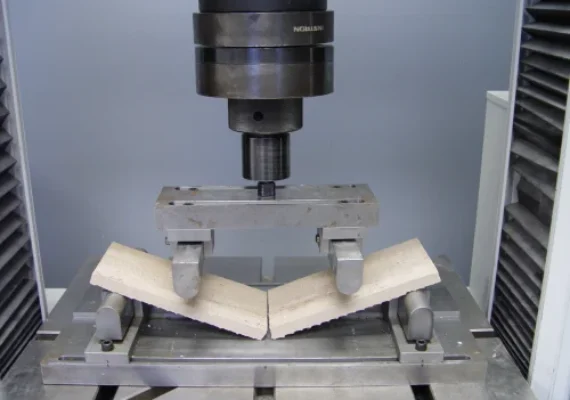
6. Flexural Testing

Flexural tests (ASTM D790 / ISO 178) evaluate bending strength and stiffness for rigid plastics, profiles, boards and reinforced materials.

7. Abrasion Resistance

Abrasion tests (e.g. DIN or Taber) assess how quickly a material wears under friction. This is crucial for:

  • Rubber soles and treads
  • Belts, rollers and industrial components
  • Parts exposed to sliding or rubbing contact

8. DSC (Differential Scanning Calorimetry)

DSC analysis provides detailed thermal information, including:

  • Melting point
  • Crystallization temperature
  • Glass transition temperature (Tg)
  • Thermal stability and purity indicators

9. TGA (Thermogravimetric Analysis)

TGA measures weight change as a function of temperature. It is used to evaluate:

  • Decomposition temperature
  • Filler or ash content
  • Thermal stability and degradation behavior

10. MFI / MFR (Melt Flow Index)

Melt Flow Index testing indicates how easily a thermoplastic flows when melted, helping to select suitable grades for injection molding, extrusion and other processes.

11. Density & Specific Gravity

Density measurements help identify grade, filler level and overall consistency of polymer and rubber materials.

How Kiyo R&D Lab Conducts Polymer & Rubber Testing

Testing at Kiyo R&D LAB follows a strict, standardized workflow to ensure accuracy and reliability:

  1. Sample conditioning: Materials are conditioned at controlled temperature and humidity.
  2. Standard selection: Appropriate ASTM, ISO or BIS methods are chosen based on material type and end-use requirements.
  3. High-precision testing: Calibrated UTM machines, hardness testers, impact testers, DSC, TGA and MFI instruments are used.
  4. Data interpretation: Curves, graphs and numerical results are analyzed for consistency and performance trends.
  5. NABL-compliant reporting: Reports include methods, conditions, numerical values and, where applicable, plots and observations.

These reports are suitable for internal QA, customer approvals, certification audits, legal documentation and academic purposes.

Why Choose Kiyo R&D LAB?

Kiyo R&D Lab stands out in the Indian testing ecosystem thanks to:

  • NABL-accredited laboratory – globally accepted test reports.
  • Wide material coverage – thermoplastics, thermosets, elastomers, composites, rubber compounds and hybrid systems.
  • Fast turnaround – many tests with 1-day reporting, ideal for production and student timelines.
  • Advanced instruments – modern mechanical and thermal testing equipment.
  • Expert technical support – guidance on interpreting results and improving process or design.
  • Industry & student friendly – practical, affordable solutions for both commercial and academic needs.

Applications of Test Data from Kiyo R&D LAB

The results from polymer and rubber material testing services in India – Kiyo R&D LAB support:

  • Product design optimization and validation
  • Material selection for new projects and upgrades
  • Supplier evaluation and approval
  • Quality control and batch release decisions
  • Failure analysis and corrective action
  • Compliance with customer and industry specifications
  • Export documentation and audit support
  • Research work and final-year engineering projects

Reliable testing leads to superior product performance and fewer failures in the field.
Polymer & Rubber Material Testing Services in India – NABL Certified | Kiyo R&D LAB

Conclusion

Polymers and rubber materials play a crucial role in modern manufacturing, but their performance cannot be assumed—it must be scientifically verified. Mechanical, thermal and physical testing ensure the material you use is strong, durable and reliable enough for its intended function.

With advanced infrastructure, NABL accreditation and expert technical capability, polymer and rubber material testing services in India – Kiyo R&D LAB provide accurate insights for manufacturers, OEMs, researchers and students across the country.

If your material matters, testing it matters even more—and Kiyo R&D Lab is ready to help you validate it with confidence.

Call Now Button