Paint and coatings don’t fail randomly. In most real-world cases, failure starts with something basic: the coating was applied at the wrong thickness. Too thin, and the substrate is under-protected. Too thick, and the coating may crack, cure poorly, or lose adhesion over time. That’s why DFT testing of paint – Kiyo R&D LAB is not just an inspection step—it is a core quality control tool that protects product performance, customer trust, and long-term durability.
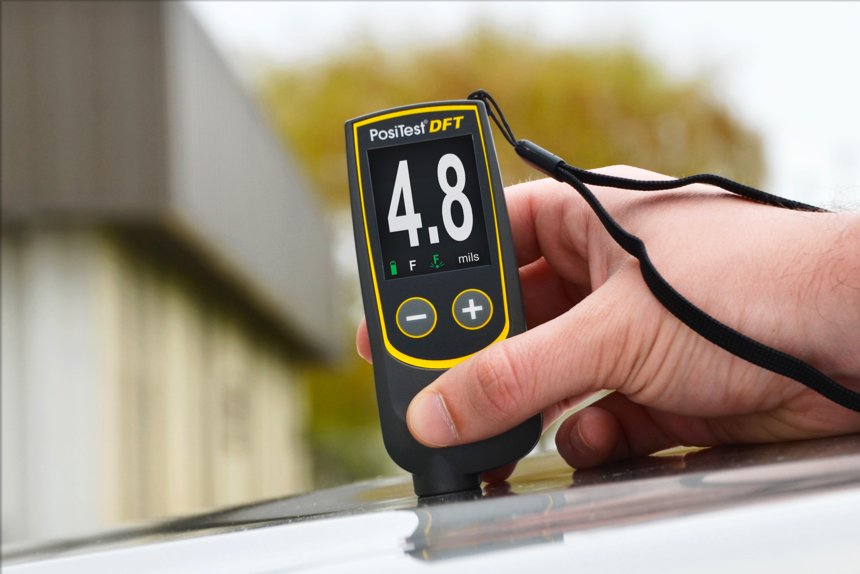
DFT stands for Dry Film Thickness. It is the thickness of the paint or coating layer after it has dried or cured. DFT is typically measured in microns (µm) or mils. A coating system is engineered to perform within a specified thickness range. When DFT is outside that range, the coating may look fine initially but fail early in service.
If you’re relying on visual inspection or “experience” to judge thickness, you’re taking a risk. Human eyes cannot measure microns, and small thickness errors can create big failures. DFT testing helps verify that the coating meets specification and performs as intended.
DFT testing is widely used across industries where coating performance is critical. At Kiyo R&D LAB, we commonly support DFT checks for:
Accurate DFT testing is not just “placing a gauge and reading a number.” It requires the right method, correct calibration, sufficient readings, and proper interpretation. DFT testing of paint – Kiyo R&D LAB follows a structured approach designed to produce reliable, repeatable, and auditable results.
The base material affects the measurement principle. We identify whether the substrate is ferrous (steel/iron) or non-ferrous (aluminium/copper/zinc), and we understand whether the system is single-coat or multi-coat.
Depending on the substrate, appropriate non-destructive methods are used:
Reliable DFT results depend on properly calibrated instruments. We verify gauge performance using reference standards/foils and ensure the instrument setup matches the job condition. Surface curvature, roughness, and measurement location strategy are also considered.
We take multiple readings across a defined area to capture uniformity and reduce random error. The readings are recorded systematically, and the results are evaluated against the specification limits.
Results are presented clearly with relevant details such as measurement basis, observed values, and interpretation against acceptance criteria (as per customer specification/standard requirement). This helps manufacturers, applicators, and inspectors make confident decisions.
DFT testing is typically performed in line with applicable standards and project requirements. At Kiyo R&D LAB, we align testing practices to the appropriate standards and documented procedures, ensuring test results are consistent and defensible for audits, customer approvals, and quality records.
Many coating disputes happen because DFT was measured incorrectly. The most common issues include:
Kiyo R&D LAB focuses on proper method control so your DFT results actually mean something.
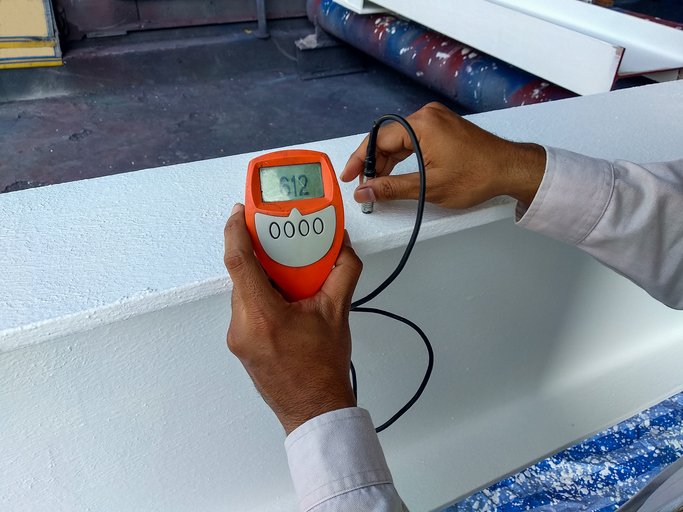
If you care about coating life, corrosion resistance, and long-term durability, you cannot ignore DFT. Thickness control is one of the fastest ways to improve coating performance without changing the paint. DFT testing of paint – Kiyo R&D LAB helps you verify the coating is applied within specification, reduce failures, and build confidence in your product or project quality.