Rubber is everywhere—automotive parts, industrial seals, gaskets, belts, rollers, cable insulation, footwear, and more. But rubber is also one of the easiest materials to get wrong. Two rubber parts can look the same on the outside, yet behave completely differently in heat, oil, load, or long-term use. That’s why Rubber material testing services in India – Kiyo R&D LAB are essential for manufacturers, suppliers, OEMs, and project teams that cannot afford field failures.
At Kiyo R&D LAB, rubber testing is approached with one clear purpose: prove performance with measurable data. Not assumptions. Not visual inspection. Real test results that help you make decisions on compound selection, process control, supplier approval, and product reliability.
Rubber is highly sensitive to environmental and operating conditions. A rubber compound can change its properties when exposed to:
Without testing, rubber products may harden, crack, swell, lose elasticity, or fail prematurely—often after installation, where replacement is expensive and reputation damage is permanent. Proper testing reduces these risks early.
Rubber material testing is the evaluation of mechanical, physical, and durability properties of rubber compounds and finished rubber components under controlled laboratory conditions. These tests help confirm that a material meets specification and will survive the application it was designed for.
Rubber material testing services in India – Kiyo R&D LAB support:
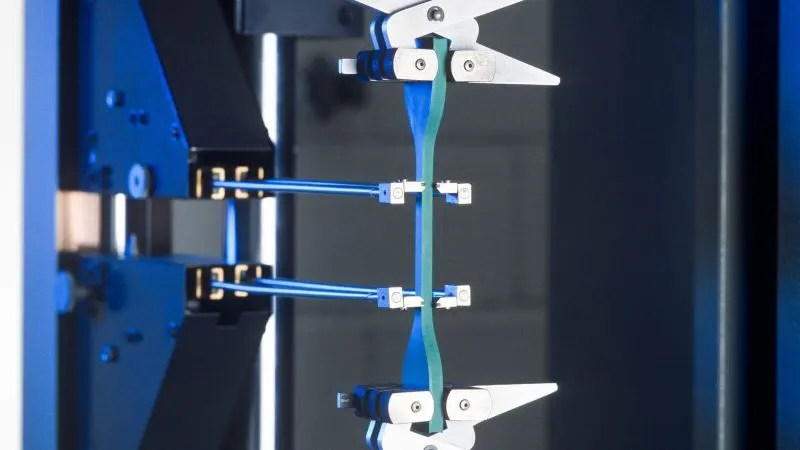
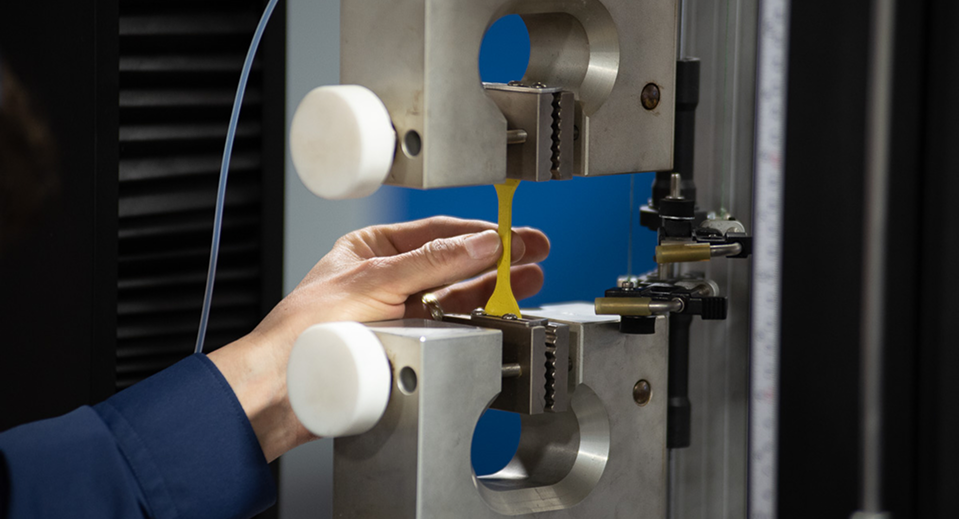
Tensile testing measures how rubber behaves when stretched. It provides values such as tensile strength and elongation at break, which are fundamental indicators of rubber performance. Modulus at specified elongation helps confirm stiffness and compound consistency. These results are used widely for QC and validation against customer specifications.
Hardness is one of the most requested rubber parameters because it directly affects sealing ability, wear resistance, and deformation. Kiyo R&D LAB supports hardness testing using common hardness scales such as Shore and IRHD as applicable. If hardness is wrong, the part may leak, deform permanently, or fail under load—simple as that.
Abrasion resistance testing evaluates how well rubber resists wear under friction. This is critical for conveyor belts, flooring, treads, rollers, and parts that continuously rub against surfaces. Poor abrasion resistance leads to rapid material loss and reduced service life.
Compression set evaluates how well rubber returns to its original shape after being compressed for a set time at a defined temperature. This is especially important for seals and gaskets. If compression set is high, sealing force drops over time and leakage risk increases.
Rubber properties change with aging—especially under heat. Aging tests help evaluate how tensile strength, elongation, and hardness shift after controlled thermal exposure. This helps predict whether rubber will become brittle, hard, or weak in real service.
Many rubber parts operate in contact with oils, fuels, or chemicals. Compatibility testing helps evaluate volume change, mass change, and retention of mechanical properties after immersion. If swelling is excessive or properties drop significantly, the compound is not suitable for that environment—no matter how good it looks on day one.
Density testing helps verify formulation consistency and detect unwanted changes in compound composition. It is useful for batch comparison, incoming inspection, and basic compound identification support.
Rubber testing must be performed using recognized standards and controlled conditions; otherwise results are not comparable. Kiyo R&D LAB performs testing aligned to relevant ASTM/ISO/IS requirements as applicable to the product and customer needs. This helps ensure results are consistent, auditable, and accepted by clients and quality teams.
A lot of rubber issues happen because companies test only one parameter and ignore the rest. The most common mistakes include:
Reliable rubber testing is not just about having instruments—it’s about method control, calibration discipline, and correct interpretation. Kiyo R&D LAB supports rubber manufacturers and users with professional testing practices and clear reporting that can be used for QC, customer submissions, and decision-making.
Rubber is not a “one-test material.” If you want reliable performance, you need a testing approach that matches your real application. Rubber material testing services in India – Kiyo R&D LAB help you validate compound quality, reduce field failures, and build confidence in your product performance—before problems become expensive.