Rubber components often work in heat—engine compartments, industrial machinery, hot pipelines, sealing systems, chemical processing areas, and high-load applications where temperature continuously rises. Rubber may look strong at room temperature, but under heat the same compound can soften, lose strength, change elasticity, or fail early.
That’s why rubber tensile testing high temperature – Kiyo R&D LAB is essential for manufacturers and R&D teams who want dependable performance under real operating conditions. High-temperature tensile testing helps verify whether a rubber compound can maintain strength and elongation when exposed to elevated temperatures and mechanical stress at the same time.
Heat can change rubber behavior significantly. Depending on the compound and additives, elevated temperature can trigger softening, reduced tensile strength, loss of elongation, permanent set, micro-cracking, or faster thermal aging. These effects may not be obvious during standard room-temperature checks.
When rubber parts fail in service, the impact is usually expensive: leaks, downtime, warranty issues, safety risks, and reputation damage. High-temperature tensile testing reduces these risks by simulating realistic working conditions before the material is approved for production or use.
Tensile testing measures how a rubber specimen behaves when stretched until it breaks. When performed at elevated temperature, the same test reveals how heat influences:
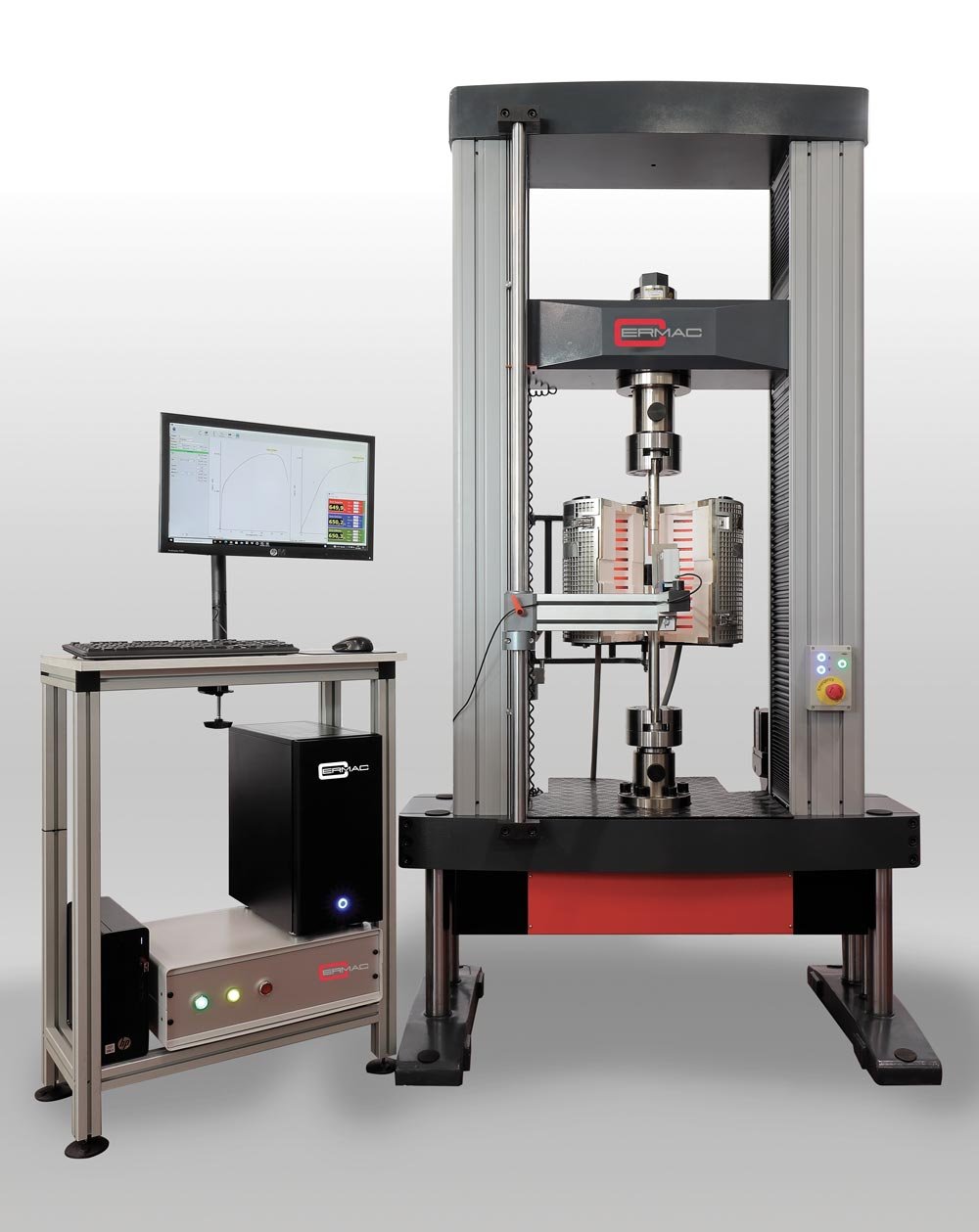
At Kiyo R&D LAB, the test is conducted using a calibrated universal testing machine (UTM) combined with temperature control (heating chamber/environmental setup) to ensure stable and repeatable conditions.
This testing is especially relevant when rubber parts are exposed to heat continuously or in cycles. Common applications include:
Test specimens are prepared to standard dimensions and checked for thickness and uniformity. Proper sample preparation matters: small variations in dimensions can cause misleading results.
The specimen is conditioned at the required test temperature using a controlled heating environment. This step ensures the entire specimen reaches stable temperature before loading begins.
Once stabilized, the specimen is subjected to tensile loading on a calibrated UTM. Load and extension are continuously recorded until break. The resulting stress–strain behavior reflects rubber performance under heat.
Key results typically include tensile strength and elongation at break at the specified elevated temperature, along with observations where applicable. Kiyo R&D LAB provides clear reporting that supports QC decisions, material selection, benchmarking, and customer approvals.

If your rubber component will face heat in real service conditions, don’t rely only on room-temperature results. Rubber tensile testing high temperature – Kiyo R&D LAB helps you verify performance where it matters most.
Kiyo R&D LAB – Chennai
Rubber & elastomer testing • Heat-conditioned tensile evaluation • Reliable reporting