Hardness is one of the most important quality parameters for rubber materials. Whether a rubber component is used as a seal, gasket, O-ring, vibration mount, cable insulation, or industrial liner, the hardness value directly affects how it behaves under load, how well it seals, and how long it survives in service conditions. When hardness is off—even slightly—products can fail early due to leakage, deformation, wear, or cracking.
At Kiyo R&D LAB, we provide reliable and accurate IRHD Hardness Tester Services in India – Kiyo R&D LAB to support rubber product manufacturers, OEMs, exporters, and R&D teams. Our aim is simple: deliver repeatable, standard-compliant hardness results that you can use confidently for quality control, compliance, and product development.
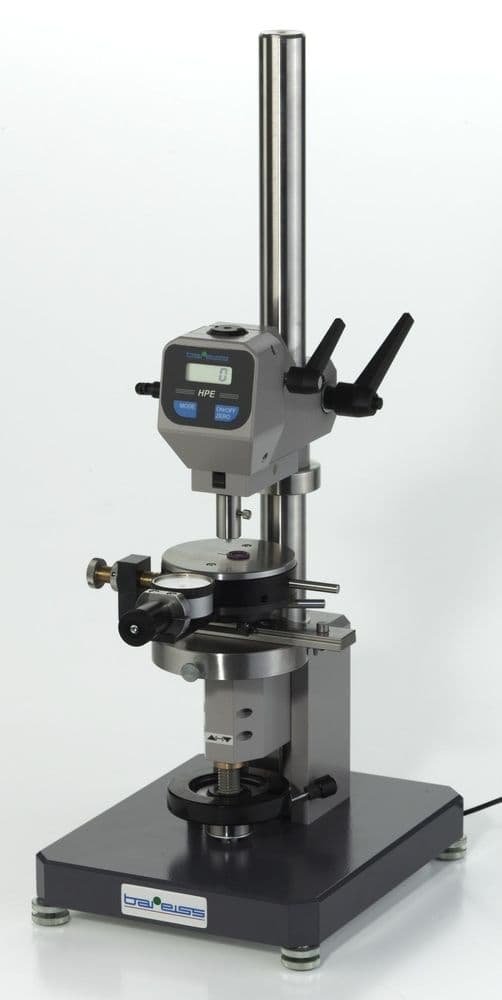
IRHD stands for International Rubber Hardness Degrees. It is a standardized hardness measurement method specifically designed for rubber and elastomeric materials. Unlike some durometer methods that can be sensitive to operator pressure or sample geometry, IRHD is valued for its precision and consistency—especially when testing curved or smaller rubber products.
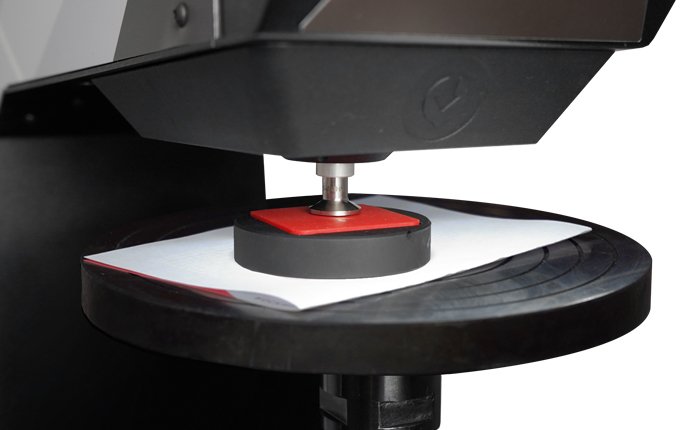
In an IRHD test, a spherical indenter is applied to the rubber surface under controlled conditions. The instrument measures the depth of indentation and converts it into an IRHD hardness value. Because the loads and measurement principles are standardized, IRHD results are widely accepted across industries.
Hardness is not just a number on a report. It’s directly connected to performance. A rubber part that is too soft may compress excessively, deform permanently, or lose dimensional stability. A part that is too hard may fail to seal properly, crack under flexing, or perform poorly under vibration.
IRHD hardness testing is commonly used to:
For quality teams, IRHD is a key checkpoint. For R&D teams, it’s a core property used to optimize formulations and validate new compounds.
Different rubber products require different hardness test approaches based on thickness, shape, and application. Kiyo R&D LAB provides IRHD testing options suitable for a wide range of rubber materials.
IRHD Normal is commonly used for standard rubber specimens with adequate thickness and a reasonably flat surface. It is suitable for routine quality control of rubber sheets, molded products, and general elastomer specimens.
IRHD Micro is designed for small or thin rubber components where standard indentation methods may not be suitable. This method is especially useful for parts like O-rings, seals, small gaskets, and miniature molded components that require precise hardness measurement.
Some elastomers are very soft, and normal hardness methods may not provide stable readings. IRHD Low Hardness is used for soft rubber materials where higher sensitivity is required to capture meaningful hardness values.
Our IRHD hardness tester services in India support a broad range of industries that rely on consistent rubber performance:
Whether you’re doing incoming inspection, production testing, or final validation, IRHD hardness data helps you make decisions faster and with higher confidence.
Kiyo R&D LAB performs IRHD hardness testing under controlled conditions, aligned with widely accepted standards. Depending on your requirement, we follow applicable ISO/IS standards and customer specifications.
Our testing practices focus on repeatability, traceability, and proper documentation—essential for audits and supplier approvals.
Many labs can “give a number.” The real value comes when the testing is done correctly and consistently. That’s what we focus on.
To get accurate hardness results, sample selection and handling matter. For best outcomes:
If you’re unsure which IRHD method is suitable, our team will guide you based on sample geometry and application.
If you are searching for dependable IRHD Hardness Tester Services in India – Kiyo R&D LAB is ready to support your quality and development needs. From routine hardness checks to R&D validation, we deliver precise test results backed by strong lab practices.
Contact Kiyo R&D LAB to schedule your IRHD hardness testing and ensure your rubber products meet performance and compliance expectations.