
Plastics are everywhere—automotive parts, electrical housings, packaging, medical devices, and consumer products. But here’s the uncomfortable truth: a plastic component is only as good as the testing behind it. Supplier COAs and datasheets mean very little unless performance is verified through a structured and repeatable testing workflow. That’s exactly why plastic testing procedure – Kiyo R&D LAB matters.
At Kiyo R&D LAB, plastic testing is not treated like a basic checklist. It is a standards-driven process built to identify weaknesses early, reduce failures, and create audit-ready documentation for customers, OEMs, and quality teams.

Many manufacturers assume testing is required only at the end of production. That assumption is expensive. A proper plastic testing procedure helps validate raw materials before production, compare polymer grades objectively, detect processing-related degradation, and ensure compliance with ASTM, ISO, IS, JIS, or customer requirements.
A reliable procedure is not only about running a machine. At Kiyo R&D LAB, the process is built on five core stages:
Every test starts with correct sample identification. Samples are logged with a unique ID, and important details like material form (granules, sheet, molded part), grade, and intended application are recorded. This prevents a common mistake: testing the wrong sample under incorrect assumptions.
Plastic testing only becomes meaningful when the correct standard is used. Depending on material and application, Kiyo R&D LAB supports ASTM, ISO, IS, JIS, and customer/OEM specifications. The lab also checks whether the chosen method is suitable for sample thickness, form, and end-use.
This is where many labs compromise accuracy. Plastics are viscoelastic, meaning moisture content and thermal history can change results significantly. Kiyo R&D LAB follows defined conditioning requirements and ensures specimens are prepared to correct dimensions and finish before testing.
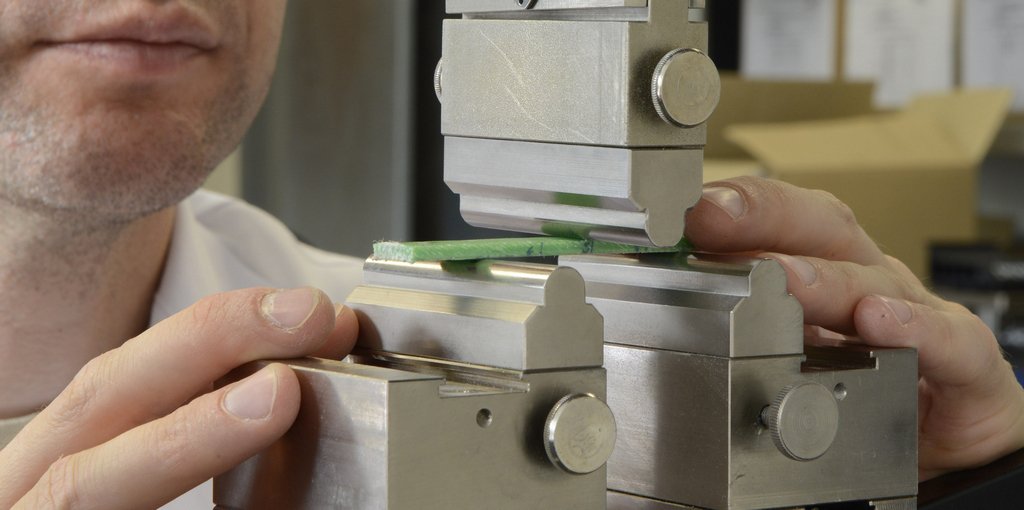
Mechanical testing forms the backbone of the plastic testing procedure – Kiyo R&D LAB. Typical tests include:
Tests are performed using calibrated equipment, controlled speeds, and proper fixtures. The goal is not just to generate numbers, but to generate trustworthy, repeatable results.
Many plastic failures happen due to heat exposure—long before visible damage occurs. Thermal testing may include heat resistance behavior, glass transition and melting behavior, and degradation trends. Kiyo R&D LAB combines thermal and mechanical results to evaluate real-life service performance.
A complete plastic testing procedure must evaluate how materials behave over time. Chemical exposure, heat aging, oil/solvent contact, and environmental stress effects are tested based on customer requirement. This helps answer a crucial question: Will this plastic still perform after months or years of use?
For electrical applications, plastics may need electrical property testing such as resistivity, dielectric strength, and related performance checks. These tests are important for safety and compliance—not optional add-ons.
Anyone can print results. The real value is in checking repeatability, identifying anomalies, and interpreting results against standard acceptance criteria. If something fails, Kiyo R&D LAB focuses on explaining the likely reason and supporting corrective action.
The final output of the plastic testing procedure – Kiyo R&D LAB is clear reporting with method references, sample identification, observations, and results presented in a professional format suitable for audits and customer approvals.
Plastic failures don’t happen because people want them to—they happen because testing is incomplete or inconsistent. A structured plastic testing procedure – Kiyo R&D LAB reduces risk, improves confidence, and helps teams make faster and smarter material decisions.