
Rubber testing is often misunderstood. Many teams treat it as a routine activity—send samples, get values, file the report. But when rubber components fail in real service, the root cause frequently points back to one thing: poor conditioning and non-standard handling. This is exactly why iso 23529 testing services in chennai – Kiyo R&D LAB matter.
ISO 23529 is not a single “test.” It is a foundation standard that controls how rubber test pieces are prepared, conditioned, and tested. If ISO 23529 is not followed correctly, even tensile, elongation, hardness, tear, or compression set results become questionable—because rubber is highly sensitive to temperature, humidity, and time-dependent behavior.

ISO 23529 defines requirements for rubber testing practice, including specimen preparation, conditioning conditions, test temperatures, tolerances, and controlled execution. The goal is simple: make results reliable, repeatable, and comparable between labs and customer locations.
Rubber properties can shift significantly with small variations in environment or handling. If samples are not conditioned correctly, you may see misleading values such as artificially high elongation, reduced hardness, or inconsistent compression set. ISO 23529 helps remove these variations and ensures results reflect true material behavior.
ISO 23529 works as a reference framework for many rubber physical property tests, such as:
Samples are logged with identification details like rubber type, sample form (sheet/molded component/cut piece), and intended application. Correct identification prevents incorrect assumptions that can invalidate testing decisions.
ISO 23529 includes guidance on test piece preparation and handling to prevent stress, edge damage, or deformation. Proper preparation is critical because small specimen defects can create large differences in results.
Conditioning is the most important part of ISO 23529-based testing. The standard defines conditioning temperature, duration, and environment requirements. This ensures repeatable results, especially for hardness, tensile/elongation, and compression set.
ISO 23529 also governs test room temperature and allowable tolerances. Rubber is sensitive to temperature shifts, so environmental control is treated as a core requirement—not a side detail.
After ISO 23529 requirements are met, tests are performed using relevant methods for the required properties (tensile, tear, hardness, compression set, aging-related change, etc.). Because the foundation practice is controlled, the results are technically defensible and comparable.
In automotive, industrial, and export-focused rubber applications, ISO 23529 compliance is often expected even when not stated. Auditors look for conditioning evidence, controlled test environment details, and clear documentation. Missing ISO 23529 alignment can lead to report rejection or retesting requirements.
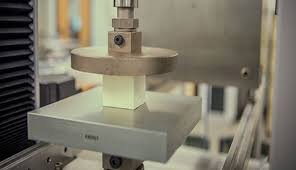
ISO 23529 is the baseline of credible rubber testing. Ignoring it leads to inconsistent results and weak conclusions. ISO 23529 testing services in Chennai – Kiyo R&D LAB help ensure rubber testing is executed with the right preparation, conditioning control, and documentation—so decisions are based on facts, not testing variation.