
The following section explores various Plastic Testing Methods used in the industry.
Plastic parts rarely fail because of “bad plastic.” They fail because someone assumed performance without verifying it. Cracking, warpage, brittle fracture, early softening, and batch variation are not mysteries—they are measurable outcomes of material behavior under load, heat, chemicals, and time.
Plastic testing methods in Chennai – Kiyo R&D LAB help manufacturers, OEM suppliers, and product teams validate plastics using practical, standards-driven testing—so you can make decisions with evidence, not habit.

Plastic testing methods are defined procedures used to evaluate how plastic materials behave in real conditions. The aim is not to generate a report—it is to answer questions that protect your production and your customers:
Supplier datasheets give typical values. Testing gives your actual values—at your thickness, your process conditions, and your end-use reality.
Chennai is a major hub for automotive and auto components, electrical and electronics products, packaging, and industrial manufacturing. In all these areas, plastics are used aggressively for weight reduction and cost optimization. That reduces safety margins. A small change in material, supplier batch, or processing conditions can create large field failures.
This is why companies search for plastic testing methods in Chennai that deliver repeatable results, practical interpretation, and documentation that customers and auditors accept.
Plastic testing at Kiyo R&D LAB commonly supports polymers such as PP, PE (HDPE/LDPE), ABS, PVC, Nylon, engineering plastics, and polymer blends. Samples can be pellets, sheets, films, molded test pieces, or finished components.
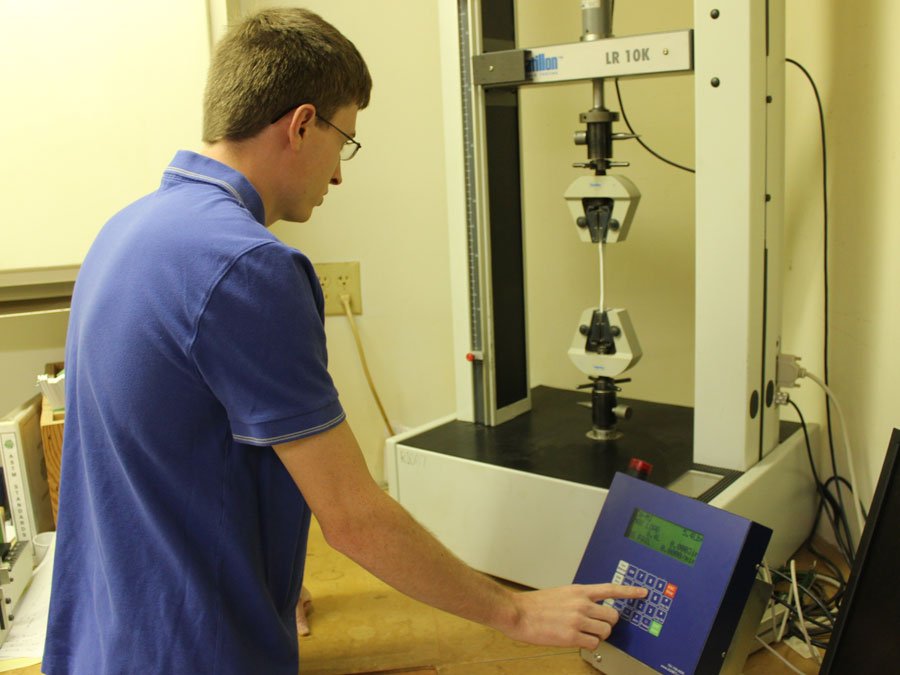
Mechanical testing evaluates strength and toughness under real loads. Typical evaluations include tensile behavior, bending performance, compression response, impact resistance, and hardness as applicable to your product.
Thermal behavior defines processing windows and heat resistance. Thermal evaluation helps identify softening tendencies, stability under temperature exposure, and whether performance changes under heat.
Thickness, density, and dimensional stability may look basic, but they detect process drift early. Many fitment and warpage issues start with small variations here.
Plastics can fail by stress cracking or swelling when exposed to oils, fuels, or cleaners. Resistance evaluation helps confirm compatibility before products reach harsh environments.
For electrical housings, appliances, and safety-driven applications, flammability behavior may be required. Correct method selection is critical because results can change with thickness and processing.
Testing supports incoming inspection and supplier validation by comparing key properties across lots. This is one of the fastest ways to catch material drift before it becomes a customer issue.
Plastic testing must be repeatable. That means using recognized standards (ASTM / ISO / IS) or customer/OEM requirements where applicable. Without defined methods, results become arguments instead of evidence.
The best time to test is before production is locked. The most common time companies test is after failures. Both are possible, but one costs far less.
If your decision is based on “we used this grade earlier,” you’re relying on habit. Testing replaces habit with evidence.
For standards-driven evaluation and practical insights, choose plastic testing methods in Chennai – Kiyo R&D LAB. We support material validation, quality control, and failure analysis with clear reports your team can act on.
To start quickly, share: polymer type (if known), sample form (pellet/sheet/part), thickness, and the performance requirement or failure issue you want to resolve.