When a material needs to be identified beyond surface appearance, visual inspection is not enough. Composition, structure, and molecular identity decide performance, not just color or texture. That is why Raman spectrometer instrumentation analysis in Chennai – Kiyo R&D Lab is useful for industries that need accurate material identification and technical clarity.
At Kiyo R&D Lab, Raman analysis is used as a decision-making tool for raw material verification, contamination study, coating analysis, polymer identification, and unknown sample investigation. It gives molecular-level information that helps clients avoid wrong assumptions and make confident technical decisions.

Material identification mistakes can be expensive. One wrong polymer grade, one contaminated batch, or one incorrect coating can create product rejection, performance failure, and customer complaints.
By choosing Raman spectrometer instrumentation analysis in Chennai – Kiyo R&D Lab, clients can:
Raman spectroscopy works by studying how light interacts with molecular vibrations in a material. When a laser interacts with the sample, the scattered light carries information about the material’s molecular structure.
At Kiyo R&D Lab, the result is not treated as just a spectrum. It is interpreted based on the client’s material, application, and testing purpose.
A professional Raman testing process requires proper sample handling, instrument setup, signal collection, and result interpretation. In many cases, Raman analysis requires minimal sample preparation and can be non-destructive.
This workflow helps identify whether the material matches expectations or shows differences that require further investigation.
Raman analysis is useful across different material types and industries. Kiyo R&D Lab supports Raman testing for plastics, polymers, chemicals, coatings, pigments, residues, powders, particles, and research samples.
For plastics and polymers, Raman analysis can help identify material families and detect mismatches. For coatings and pigments, it can support formulation comparison and surface material identification. For unknown residues or particles, Raman can help identify whether the issue is chemical, organic, pigment-related, or material-based.
Clients do not need just a graph. They need answers that support decisions. A Raman spectrum without interpretation is not very useful for quality teams, R&D teams, or customer complaint handling.
Kiyo R&D Lab focuses on answering practical questions such as:
Raman spectroscopy has several practical advantages. It is fast, highly specific for molecular identification, and suitable for small or complex samples. In many cases, it does not damage the sample.
Failure investigation often requires chemical or molecular evidence. A part may fail because of wrong material, contamination, coating variation, degradation, or process-related residue.
Using Raman spectrometer instrumentation analysis in Chennai – Kiyo R&D Lab, clients can identify unknown particles, compare failed and approved samples, investigate residues, and support root cause analysis with better evidence.
Not every Raman testing report gives useful clarity. The real value comes from correct analysis and practical interpretation. Kiyo R&D Lab focuses on accurate testing, useful technical observations, and professional reporting.
Clients choose Kiyo R&D Lab because of:
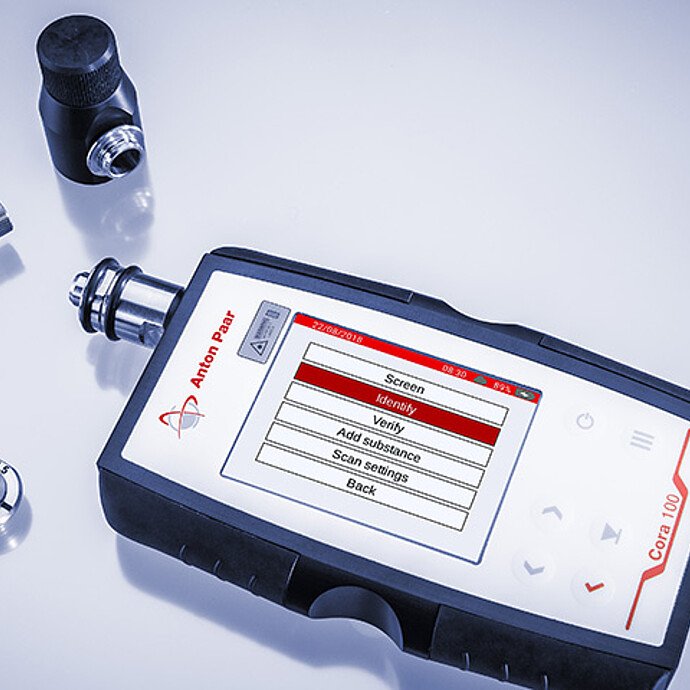
If you are looking for dependable Raman spectrometer instrumentation analysis in Chennai – Kiyo R&D Lab, our team can support your requirement with accurate Raman spectroscopy, professional interpretation, and clear reporting.
Website: www.kiyorndlab.com
Phone: 090876 86986
Yes. Raman analysis can help identify unknown materials by generating a molecular fingerprint and comparing it with reference data or approved samples where applicable.
Yes. Raman spectroscopy is useful for plastic and polymer analysis. It can help identify polymer type, compare materials, detect mismatches, and support investigation of contamination or material variation.
Raman and FTIR both provide molecular information, but they work differently. Raman is often useful for certain pigments, polymers, particles, and inorganic materials, while FTIR is widely used for organic materials, coatings, oils, polymers, and residues. In some cases, both tests are useful together.
Plastic, polymer, chemical, pharmaceutical, coating, paint, electronics, automotive, advanced materials, research, and product development industries commonly use Raman analysis for material verification and investigation.
Clients should choose Kiyo R&D Lab because the lab provides Raman analysis with practical interpretation, professional reporting, and technical support for material identification, quality control, R&D, and failure investigation.