Did you know that every material on Earth has its own unique “fingerprint”? Shine a laser on it, and it scatters light in a pattern that no other material can copy. That’s the magic behind Raman spectroscopy analysis — a powerful, non-destructive technique that identifies exactly what your sample is made of, without damaging it.
At Kiyo R&D Lab, with two advanced facilities in Chennai — Chrompet and Oragadam — we offer accurate, affordable Raman spectroscopy analysis for material identification, quality control, research, and failure investigation. Let’s decode your material’s identity. 🔬
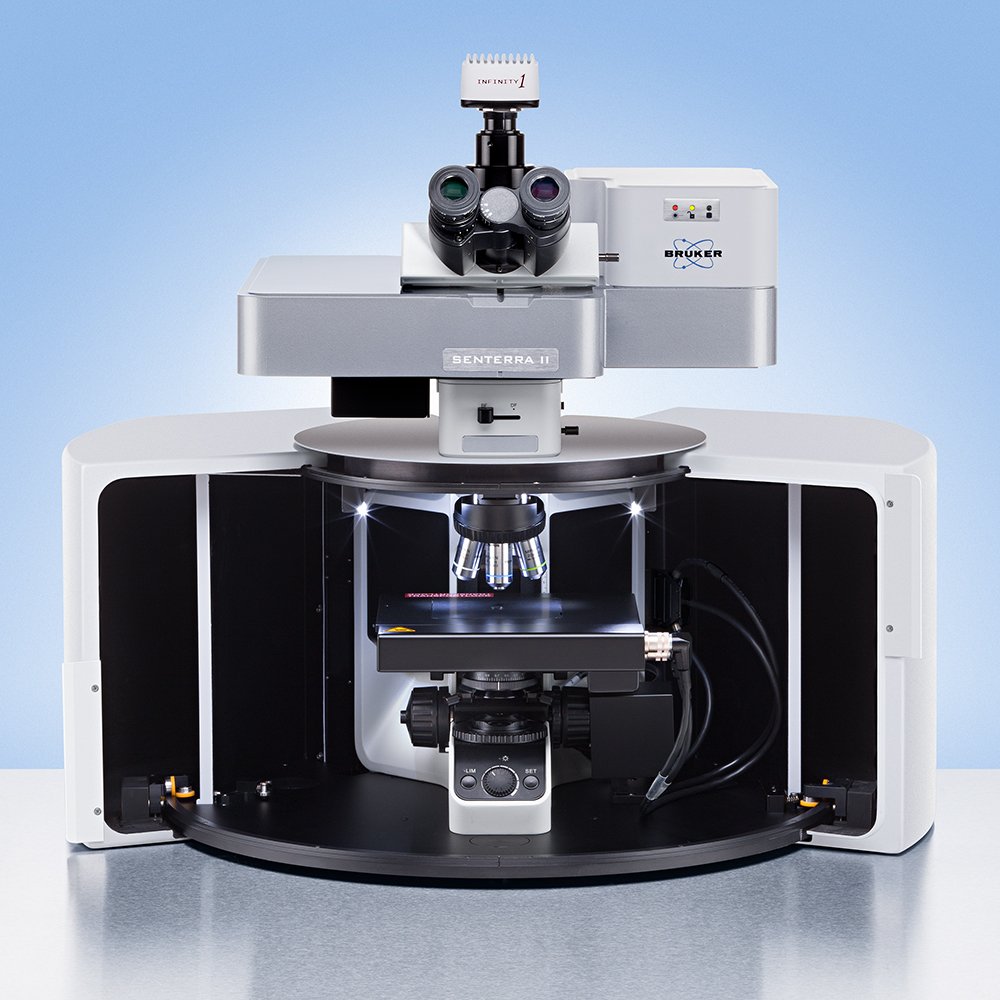
Raman spectroscopy is named after the Indian Nobel Laureate Sir C.V. Raman, who discovered the “Raman Effect” right here in India. When a laser beam hits your sample, most light bounces back unchanged — but a tiny fraction scatters with a shifted energy. This shift depends on the chemical bonds and molecular structure of the material.
A Raman spectrometer captures this scattered light and converts it into a spectrum — a series of peaks that acts like a molecular fingerprint. By matching this fingerprint against spectral libraries, we can tell you exactly what your material is, whether it’s pure, and even how its internal structure is arranged. Best of all? The test is non-destructive — your sample stays intact.
Confirm the chemical identity of polymers, minerals, pigments, drugs, and unknown substances.
Distinguish between crystal forms of the same compound — critical in pharma and materials research.
Characterise graphene, CNTs, and carbon coatings using D-band, G-band, and 2D-band analysis.
Identify unknown particles, residues, and inclusions causing defects in your products.
| Industry | How Raman Analysis Helps |
|---|---|
| Pharmaceuticals | API identification, polymorph screening, counterfeit drug detection, raw material verification |
| Polymers & Plastics | Polymer identification, blend analysis, degradation study, additive detection |
| Nanomaterials & Research | Graphene layer count, CNT quality, defect density (ID/IG ratio), thin film characterisation |
| Chemicals & Petrochemicals | Compound identification, purity checks, reaction monitoring, solvent analysis |
| Gems, Minerals & Geology | Gemstone authentication, mineral phase identification, inclusion analysis |
| Forensics & Quality Control | Unknown substance identification, paint/ink analysis, incoming material inspection |
| Academia & PhD Research | Publication-quality Raman spectra for journals, theses, and new material development |
A Raman spectrum is only trustworthy if the instrument is properly calibrated and the method is scientifically sound. That’s why every Raman analysis at Kiyo R&D Lab is performed in line with internationally recognised standards. Here’s what each one means and why it matters to you:
This standard defines reference materials (like silicon, cyclohexane, and polystyrene) with precisely known Raman peak positions. We use these to calibrate the wavenumber axis of our spectrometer — so when we report a peak at, say, 1332 cm⁻¹ for diamond, you can trust that number is accurate. Without this calibration, peak positions could drift and lead to misidentification.
Spectral resolution decides whether two closely spaced peaks appear as separate peaks or merge into one blur. This standard guides how we verify our instrument’s resolution — essential when distinguishing similar materials, such as different polymorphs of a drug or closely related polymer grades.
Detectors don’t respond equally across all wavelengths, which can distort peak intensities. This standard provides the protocol for intensity calibration so that peak height ratios — used in quantitative work like graphene defect analysis (ID/IG ratio) — are reliable and comparable between labs.
For pharmaceutical clients, we align with United States Pharmacopeia and European Pharmacopoeia chapters on Raman spectroscopy. These define instrument qualification, wavelength accuracy, and method validation requirements — so your raw material identification and polymorph reports stand up to regulatory and audit scrutiny.
Located in Chrompet, Chennai — easily reachable from South Chennai, Tambaram, Pallavaram, Guindy, and nearby industrial and academic hubs.
Situated in Oragadam, Chennai — at the heart of Tamil Nadu’s automotive and manufacturing corridor, ideal for OEMs and industrial suppliers.
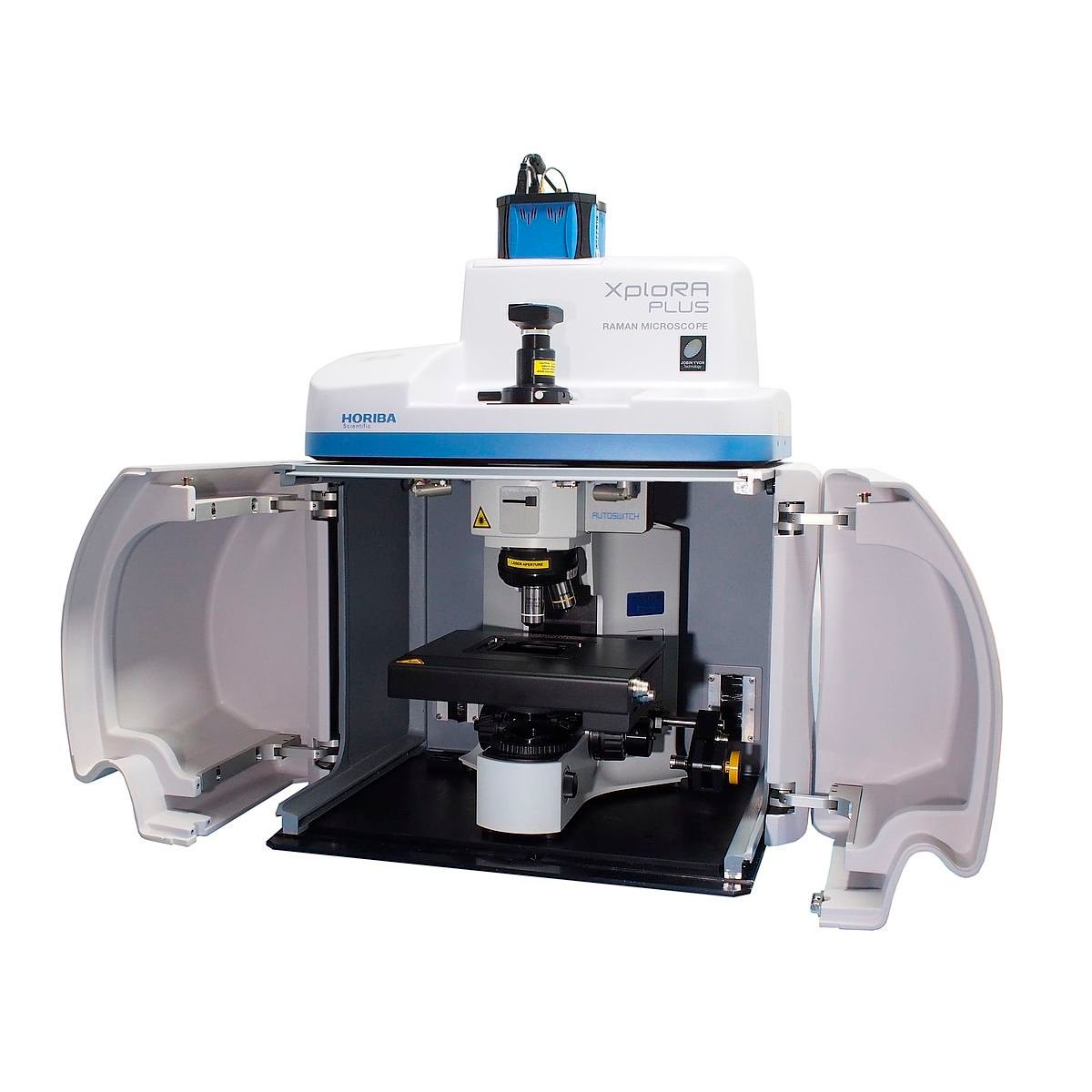
When you need to know exactly what your material is — without destroying it — Raman spectroscopy analysis is the answer. With ASTM-calibrated instruments, expert peak interpretation, and two convenient labs at Chrompet and Oragadam, Kiyo R&D Lab is Chennai’s trusted partner for Raman analysis.
Raman analysis identifies the chemical composition and molecular structure of materials. It’s used for material identification, polymer analysis, pharmaceutical polymorph studies, graphene/carbon characterisation, gemstone authentication, and contamination investigations — all without destroying the sample.
No — Raman is a non-destructive technique. The laser simply scatters off your sample’s surface, so your specimen is returned intact. This makes it ideal for precious, rare, or limited samples like gemstones, forensic evidence, and research materials.
We follow internationally recognised standards including ASTM E1840 (Raman shift calibration), ASTM E2529 (resolution verification), ASTM E2911 (intensity correction), and pharmacopoeial methods like USP <858> and EP 2.2.48 for pharmaceutical work — so your results are accurate and audit-ready.
Both identify molecular structures, but they’re complementary. FTIR measures light absorption while Raman measures light scattering. Raman works better for carbon materials, aqueous samples, and samples inside glass containers, while FTIR excels for certain polar functional groups. Our team will recommend the right technique — or both — for your problem.
We analyse solids, powders, liquids, films, fibres, coatings, polymers, minerals, pharmaceuticals, nanomaterials, and more. Most samples need little to no preparation. If you’re unsure, just call 90420 86986 and our team will guide you.
Absolutely — Raman is the gold-standard technique for carbon materials. We analyse the D, G, and 2D bands to estimate graphene layer count, defect density (ID/IG ratio), and overall quality of graphene, graphite, CNTs, and carbon coatings.
Yes! We regularly support PhD scholars, M.Tech/M.E./M.Sc. students, and research institutions with publication-quality Raman spectra for journals, theses, and projects — at student-friendly pricing with expert peak interpretation included.
It’s easy — tap to call 90420 86986 / 90876 86986, visit www.kiyorndlab.com, or 💬 request a quote on WhatsApp and we’ll respond promptly.