
Tensile strength is one of the most quoted numbers in materials engineering — it tells you the maximum pulling stress a material can take before it breaks. Whether you are a student, a designer, or an engineer checking a datasheet, understanding the tensile strength formula is the key to reading and comparing material properties correctly.
In this guide we explain what tensile strength means, the formula and its units, the different types, and how the test is actually performed — with a simple worked example you can follow.
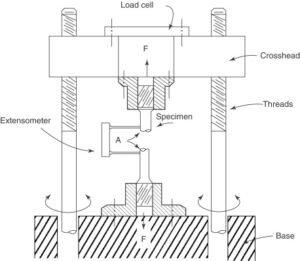
A clear guide to tensile strength from Kiyo R&D Lab
Tensile strength is the maximum stress a material can withstand while being stretched or pulled before it breaks. It is a measure of how much pulling force a material resists, expressed as force per unit of cross-sectional area — not just the raw force, which is why the tensile strength formula divides load by area.
Because it is normalised by area, tensile strength lets you compare a thin wire and a thick bar of the same material fairly. It is one of the first properties engineers check when selecting a material, and it appears on virtually every material datasheet.
The tensile strength formula is simply the maximum force divided by the original cross-sectional area of the sample:
Tensile Strength (σ) = F ÷ A
maximum force ÷ original cross-sectional area
| Symbol | Meaning | SI Unit |
|---|---|---|
| σ | Tensile strength (stress) | Pa (or MPa) |
| F | Maximum force at break | N (newton) |
| A | Original cross-section area | m² (or mm²) |
| System | Unit | Note |
|---|---|---|
| SI | MPa (N/mm²) | 1 MPa = 1 N/mm² |
| SI (large) | GPa | 1 GPa = 1000 MPa |
| Imperial | psi / ksi | 1 ksi ≈ 6.895 MPa |
Tensile strength is measured on a universal testing machine (UTM). The steps are straightforward:
| Step | What Happens |
|---|---|
| 1. Prepare | Cut a standard specimen (dumbbell / dogbone) |
| 2. Clamp | Grip both ends in the UTM jaws |
| 3. Pull | Apply increasing load at a set rate |
| 4. Record | Capture peak force and elongation |
| 5. Calculate | Apply the formula: σ = F ÷ A |
A metal bar with a cross-section of 20 mm² breaks at a maximum force of 9,000 N. Using the tensile strength formula:
σ = 9000 N ÷ 20 mm² = 450 N/mm² = 450 MPa
So the material’s ultimate tensile strength is 450 MPa (about 65 ksi).
In real testing, the exact specimen shape, speed, and conditions follow a standard such as ASTM D638 (plastics), ASTM E8 (metals), or ASTM D412 (rubber) — which is what makes results comparable and accepted.
Understanding the tensile strength formula is one thing; getting accurate, standard-compliant numbers for your material is another. Based in Chennai (Chrompet & Oragadam), Kiyo R&D Lab performs tensile testing on plastics, rubber, and metals to recognised ASTM and ISO methods.
Need the real tensile strength of your material, not just the formula? Send us your sample and we’ll test it and report clearly.
Call 90420 86986 Request a QuoteExplore all our capabilities at www.kiyorndlab.com.
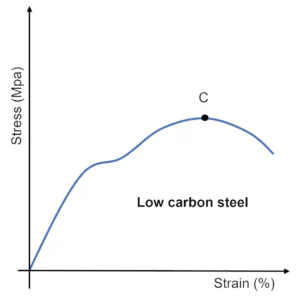
The tensile strength formula — σ = F ÷ A — is simple, but getting an accurate, standard-compliant number for your own material takes the right equipment and method. That is where a testing lab comes in.
If you need the real tensile strength of a plastic, rubber, or metal — not just the theory — the team at Kiyo R&D Lab in Chennai is ready to help. Reach out today and turn your sample into a reliable, audit-ready report.