
How much sudden shock can your plastic absorb before it cracks? A brittle failure under impact can turn a good design into a warranty problem overnight. The charpy impact test measures exactly that — the energy a material absorbs when struck by a swinging pendulum — giving you a clear number for toughness. Kiyo R&D Lab tests the impact resistance of your plastics to ISO 179 with accuracy and confidence.
From rigid thermoplastics and filled compounds to composites and moulded parts, our expert team delivers accurate impact data, supporting analysis, and clear, audit-ready reports you can rely on.
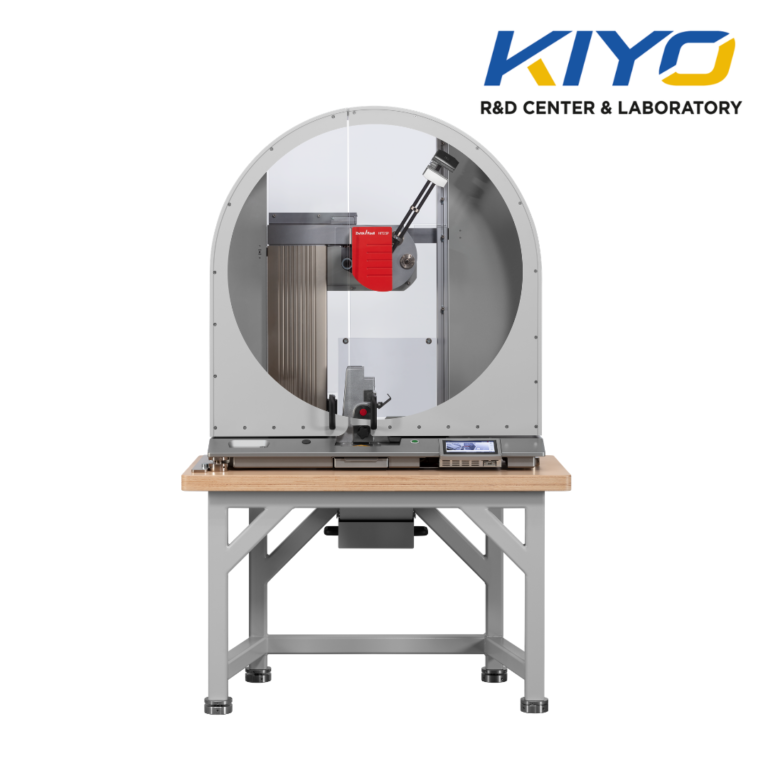
Your complete guide to the Charpy impact test at Kiyo R&D Lab
The charpy impact test measures how much energy a material absorbs when it is struck by a swinging pendulum hammer. A specimen is supported horizontally as a simple beam, and the pendulum strikes it in the middle. The energy lost by the pendulum in breaking the sample — read from how high it swings afterwards — is the impact energy, a direct measure of toughness.
For plastics, the method follows ISO 179. Specimens can be notched or unnotched, and struck edgewise or flatwise, because a notch concentrates stress and reveals how the material behaves when a flaw or sharp corner is present. The result tells you whether a plastic is tough or brittle under sudden load.
Our charpy impact test service captures the impact behaviour your specification calls for, in the configuration that matches your product.
Energy absorbed at break.
Energy per cross-section.
With or without a notch.
Strike orientation.
Failure behaviour.
Lot-to-lot toughness.
| Designation | Configuration |
|---|---|
| ISO 179-1 | Instrumented / non-instrumented |
| eA / eB notch | Notched, edgewise |
| Unnotched | Edgewise or flatwise |
| Result | kJ/m² impact strength |
Exact specimen and notch type follow ISO 179 and your specification.
The charpy impact test and the Izod test both use a swinging pendulum, but they hold the specimen differently — a key distinction when your specification names one or the other.
ISO ASTM
| Aspect | Charpy | Izod |
|---|---|---|
| Specimen held | Horizontal, both ends | Vertical, clamped one end |
| Notch faces | Away from the strike | Toward the strike |
| Plastics standard | ISO 179 | ISO 180 / ASTM D256 |
| Result unit | kJ/m² | kJ/m² or J/m |
Need Izod instead of Charpy? We run both — if your buyer specifies ASTM D256 (Izod), we can test to that too. Ask us which method fits your specification.
Based in Chennai with branches in Chrompet and Oragadam, Kiyo R&D Lab makes plastic impact testing easy to access for the Chennai–Oragadam industrial corridor, with convenient drop-off and courier-friendly collection.
Looking for a charpy impact test? Our facilities measure the impact strength of plastics to ISO 179, notched or unnotched, with clear, accurate reporting.
Call 90420 86986 Request a QuoteExplore all our capabilities at www.kiyorndlab.com.
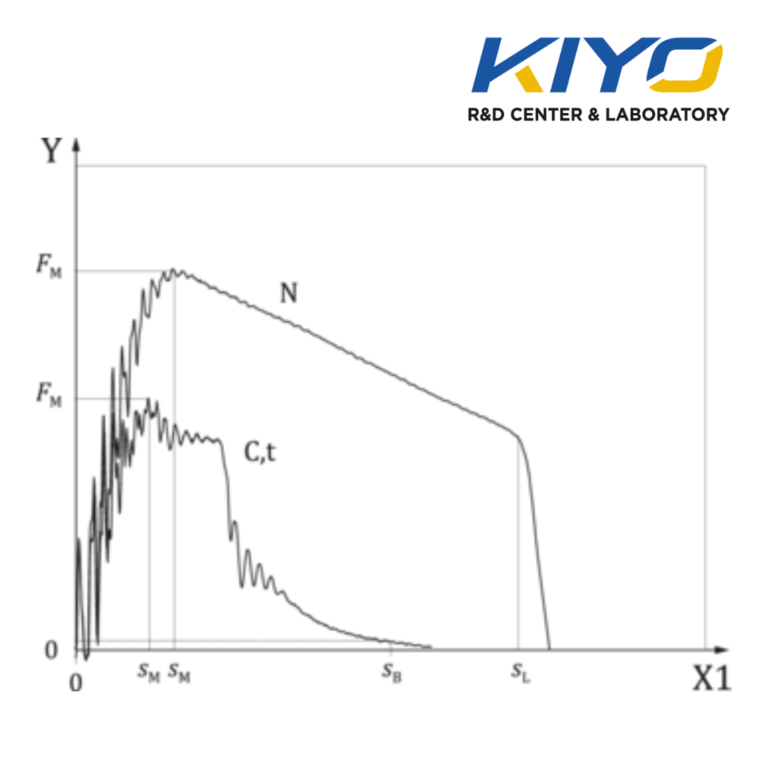
Impact resistance decides whether a part survives a drop, a knock, or a sudden load. With an accurate charpy impact test, we combine correct specimen preparation, the right notch and orientation, and expert interpretation to give you toughness data you can stand behind.
From a single impact check to a full mechanical profile across tensile, flexural, and impact, the team at Kiyo R&D Lab is ready to help. Reach out today and turn your sample into a reliable, audit-ready report.