
A rubber seal, gasket, or mount has to stay flexible, hold its shape, and survive heat and wear for years — and the only way to know it will is to test it. Rubber testing measures the handful of properties that decide whether a compound performs in service: how hard it is, how it ages, whether it recovers after compression, how it resists wear, and how strong it is. This guide walks through the five core properties and what each one tells you.
At Kiyo R&D Lab, rubber testing is a core, NABL-scoped capability. Understanding these five tests helps you specify the right compound, qualify a supplier, or diagnose why a part failed.
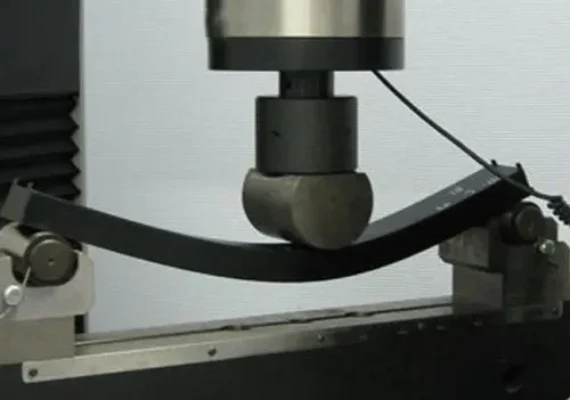
Your guide to the core rubber tests at Kiyo R&D Lab
Most rubber testing comes down to five properties that together describe how a compound will behave in real use. The table below shows each test and the question it answers.
| Test | What It Answers |
|---|---|
| Hardness (Shore A/D) | How soft or firm is the compound? |
| Ageing (heat / ozone) | How does it change over time & heat? |
| Compression set | Does it recover after being squeezed? |
| Abrasion resistance | How well does it resist wear? |
| Tensile & elongation | How strong & stretchy is it? |
Each is run on specimens prepared and conditioned to a common standard, so results are comparable. A typical rubber testing panel combines several of these to build a full performance profile of the compound.
No single number describes a rubber part. A compound can be the right hardness yet take a permanent set, or strong when new yet brittle after ageing. Combining the five tests is what makes rubber testing predictive rather than a snapshot — it shows how the part behaves across its whole service life, not just on day one.
That is why seal, gasket, and mount specifications almost always call for a panel of these properties rather than one test in isolation.
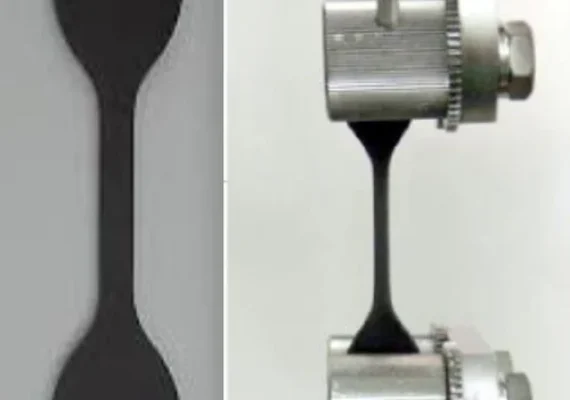
Hardness, ageing, compression set, abrasion, and tensile together tell you how a rubber part will really perform — over years, not just at the start. With Kiyo R&D Lab’s NABL-scoped rubber testing, you get all five to recognised ISO and ASTM methods, in clear, defensible reports.
Tell us your compound and the properties you need verified, and our Chennai team will build the right test panel and get you results you can trust.
Call: 90420 86986 | 90876 86986
Web: www.kiyorndlab.com
Our rubber testing follows recognised ISO and ASTM methods — ISO 48 / ASTM D2240 for hardness, ISO 37 for tensile, ISO 815 for compression set, ISO 188 for ageing, and ISO 4649 / ASTM D5963 for abrasion. Accredited reporting is available for methods within our NABL scope; we confirm the exact status before you commit.
Because a seal that does not spring back loses its sealing force. In rubber testing, compression set is often the single best predictor of long-term sealing performance.
Accelerated heat or ozone exposure mimics years of service in a short time, showing how hardness, strength, and elongation shift as the rubber ages.
Often yes. A single submission can be routed across hardness, tensile, compression set, and more, and you receive one combined rubber testing report.
Most tests are completed within a few working days; ageing tests take longer because the exposure itself runs for a set period. We share a timeline up front.