
A pouch looks perfectly sealed on the line, then leaks in transit, pops open on the shelf or peels apart in the customer’s hands. Knowing why packaging heat seals fail is the first step to fixing it, because nearly every failure traces back to temperature, pressure, time, material or contamination.
This guide covers the main causes, how to read the failure mode, and a practical troubleshooting sequence. Whether you run flow-wrap, pouches, lidding film or form-fill-seal, the reasons packaging heat seals fail follow the same basic physics: the sealant layers must reach the right temperature, under the right pressure, for long enough, on a clean surface.
At Kiyo R&D Lab, we help manufacturers trace defects back to their source, starting with the material and the process.
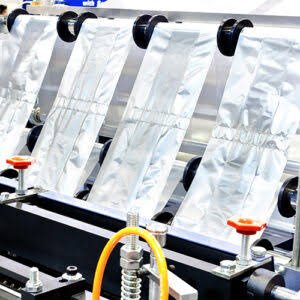
Most cases where packaging heat seals fail trace back to a small set of causes. Matching the symptom to the cause narrows the search quickly.
| Cause | What Goes Wrong | Typical Symptom | Fix |
|---|---|---|---|
| Temperature too low | Sealant layers do not fully melt and fuse | Easy peel, weak or cold seals | Raise jaw temperature in small steps and confirm with a probe |
| Temperature too high | Film thins, shrinks or burns through | Brittle seals, wrinkles, melted edges, distorted print | Lower temperature and check jaws for hot spots |
| Low pressure or short dwell | Poor contact and too little time for fusion | Weak or patchy seals, intermittent leaks | Increase pressure or dwell and check jaw alignment |
| Contaminated seal area | Powder, oil, liquid or dust blocks fusion | Channel leaks, weak spots under product traces | Improve filling, keep the seal zone clean |
| Wrinkles and folds | Film is trapped unevenly between the jaws | Channel leaks even when peel strength looks fine | Correct film tension, tracking and former setup |
| Worn or dirty jaws | Heat and pressure are uneven across the seal | Strong on one side, weak on the other | Clean jaws, replace PTFE tape or pads, level the jaws |
| Material mismatch | Sealant layers are incompatible or too thin | Seals that never reach full strength | Match sealant to sealant and check the film specification |
| Slip or additive bloom | Migrated additives sit on the seal surface | Weak seals that worsen as the film ages | Review the additive package and test aged film |
| Seal stressed while hot | Seal is loaded before it cools and gains strength | Seals opening during filling or drop | Add cooling time, slow the line, check hot tack |
The way a seal separates tells you a lot about why packaging heat seals fail. Always record the failure mode along with the strength value.
When packaging heat seals fail on a running line, work through these steps in order and change one variable at a time.
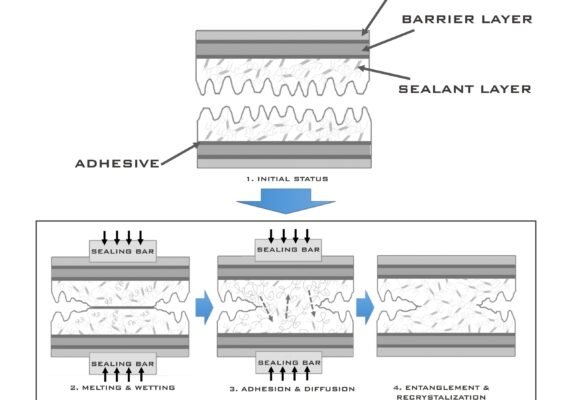
Understanding why packaging heat seals fail turns a vague quality complaint into a clear checklist: confirm the sealing window, keep the seal area clean, maintain the jaws, read the failure mode and test for leaks as well as strength.
For the wider picture on plastic failure, read why plastic parts fail even when the raw material is good.
Labs that investigate why packaging heat seals fail rely on a short list of ASTM and ISO methods:
Always confirm the current edition with the standards body before writing it into a specification.
In practice it is usually an imbalance between sealing temperature, pressure and dwell time, followed closely by contamination or wrinkles in the seal area. Checking those four first resolves most line problems.
Yes. A peel test measures strength, not continuity. A narrow channel caused by a wrinkle or trapped product can leak even when the surrounding seal is strong, so pair strength tests with dye penetration or bubble leak testing.
No. Strength rises across the sealing window, then plateaus or drops once the film thins, shrinks or degrades. The best temperature is the one in the middle of a stable window, not the highest one.
Start with the failure mode, then compare good and failed seals while logging temperature, pressure and dwell time. Check for contamination and wrinkles, inspect the jaws, and send film and seal samples for lab testing if the cause is still unclear.