
“Is this plastic strong enough?” sounds like one question, but it is really several — because a part can be strong in tension yet weak in bending, or stiff yet brittle on impact. Measuring the strength of plastic materials means choosing the test that matches the load your part will actually see. This guide explains how to check the strength of plastic materials and which test answers which question.
At Kiyo R&D Lab, measuring the strength of plastic materials to ASTM and ISO methods is everyday work. Understanding the main strength tests helps you specify the right one and read the result correctly.
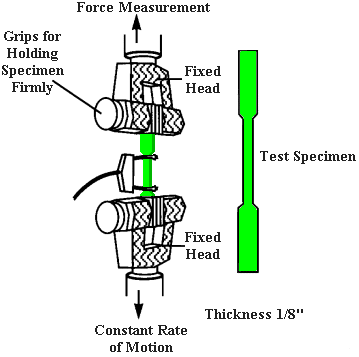
Your guide to plastic strength testing at Kiyo R&D Lab
There is no single number for the strength of plastic materials — each test loads the material in a different way. The table below shows the main tests and the kind of strength each one measures.
| Test | Strength It Measures |
|---|---|
| Tensile (ISO 527 / ASTM D638) | Pulling strength & elongation |
| Flexural (ASTM D790 / ISO 178) | Bending strength & stiffness |
| Impact (Izod / Charpy) | Toughness & resistance to shock |
| Compression | Resistance to crushing load |
| Hardness (Shore / Rockwell) | Surface resistance to indentation |
The right test depends on how the part is loaded in service — a clip needs impact and flex data, a bracket needs tensile and compression. Measuring the strength of plastic materials well means matching the test to the real load.
A common mistake is to ask for “the strength” and expect a single value. In reality, the strength of plastic materials is a profile: tensile, flexural, impact, and hardness together describe how a part behaves. A material can top one test and fail another, so a single figure can be misleading.
Specimen preparation and temperature also matter — the same material tests differently if the specimen is cut badly or tested hot, which is why standardised methods exist.
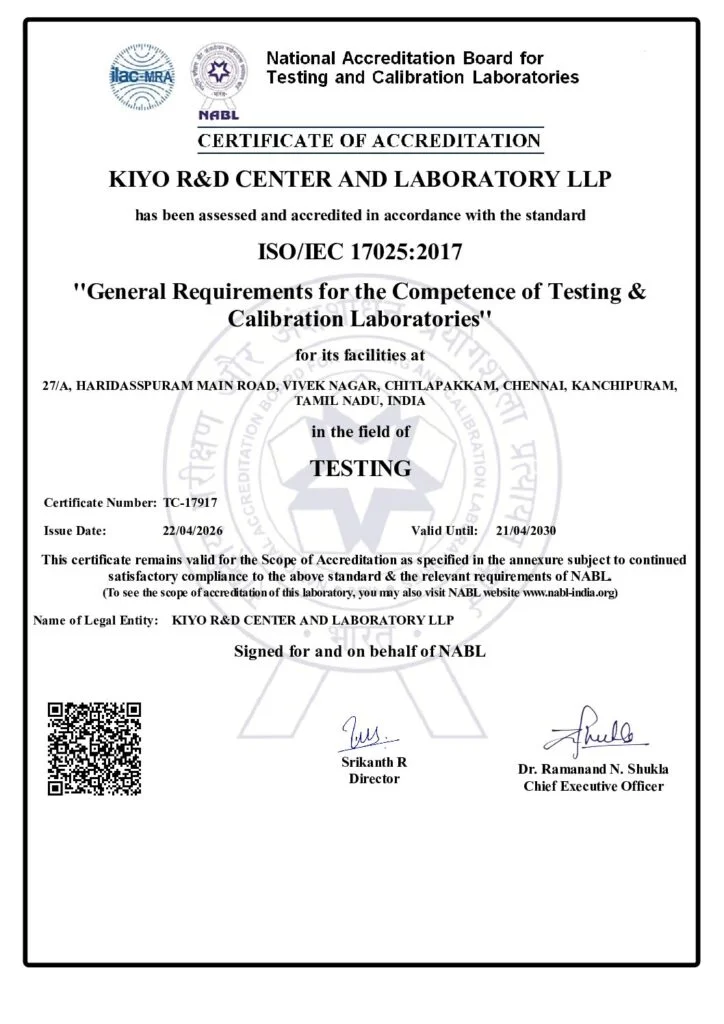
The right way to judge the strength of plastic materials is to test the way the part is loaded — pulling, bending, or impact — not to chase a single number. Kiyo R&D Lab measures tensile, flexural, impact, compression, and hardness to ASTM and ISO methods, with NABL-accredited reporting where applicable.
Tell us your material and how the part is used, and our Chennai team will pick the right tests and report the full strength profile clearly. Send a sample to get started.
Call: 90420 86986 | 90876 86986
Web: www.kiyorndlab.com
Measuring the strength of plastic materials follows recognised ASTM and ISO methods — ISO 527/ASTM D638 for tensile, ASTM D790/ISO 178 for flexural, and Izod/Charpy for impact. Accredited reporting is available for methods within our NABL scope.
It depends on the load — tensile for pulling, flexural for bending, impact for shock. We help you match the test to how your part is used when measuring the strength of plastic materials.
Strength is the load a material can take before it breaks or yields; stiffness (modulus) is how much it resists deforming. A good strength report gives both.
Standard strength values come from standard specimens, but we can also advise on component-level testing. Tell us the part and we will suggest the best approach.
Moulded specimens, or sheet/plaque we can cut specimens from. We confirm the specimen type and count for your chosen tests when we scope the job.