
Melt flow is one of the quickest, most reliable ways to check whether a thermoplastic batch is consistent and processable. ASTM D1238 MFI testing measures how much molten polymer flows through a standard die under a set load and temperature — a single number that tells you a lot about grade, molecular weight, and batch-to-batch consistency. At Kiyo R&D Lab, we run this test with calibrated instruments and clear, defensible reporting.
Whether you are verifying incoming resin, qualifying a compound, or troubleshooting a moulding problem, accurate ASTM D1238 MFI testing gives you a fast, comparable measure of flow behaviour. Our team handles conditioning, testing, and reporting in-house so your results hold up to any customer audit.
Your guide to ASTM D1238 melt flow testing at Kiyo R&D Lab
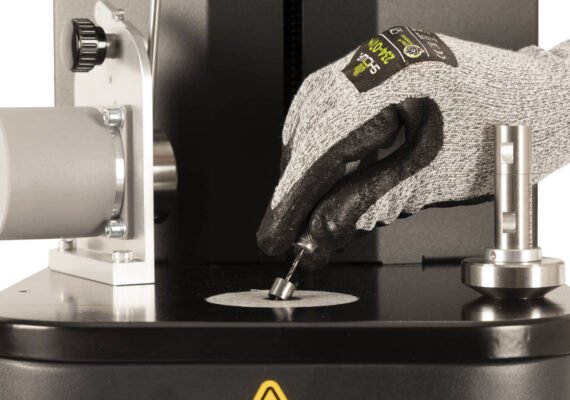
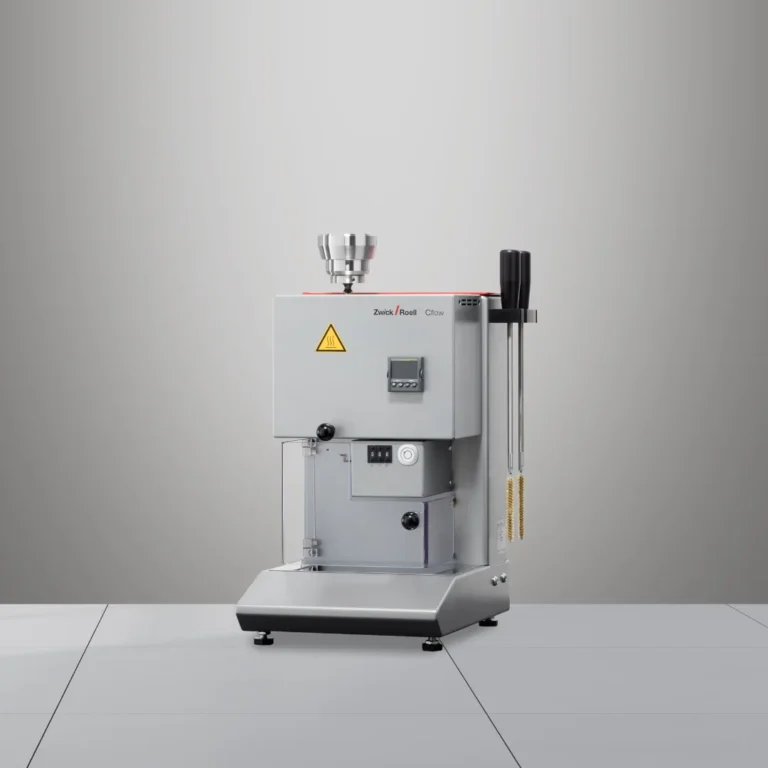
In ASTM D1238 MFI testing, polymer is melted in a heated barrel and forced through a standard die by a weighted piston. The mass extruded in ten minutes is the melt flow rate (MFR), reported in g/10 min. The result depends entirely on the temperature and load used, so the test condition must always be stated alongside the value.
| Polymer | Typical Condition (Temp / Load) |
|---|---|
| Polypropylene (PP) | 230 °C / 2.16 kg |
| Polyethylene (PE) | 190 °C / 2.16 kg |
| ABS | 220 °C / 10 kg |
| Polystyrene (PS) | 200 °C / 5 kg |
Because the condition changes the result, correct ASTM D1238 MFI testing means using the exact temperature and load your specification calls for — not a generic default. We confirm the condition with you before every run.
A melt flow value is an indirect measure of molecular weight: higher MFI means lower molecular weight and easier flow, lower MFI means the opposite. That makes ASTM D1238 MFI testing a fast way to confirm grade, detect contamination or degradation, and check batch consistency before material goes into production.
For moulders and compounders, routine melt flow checks catch an off-spec batch before it becomes a field failure or a rejected shipment.
A melt flow value is only useful if it is measured at the right condition, on calibrated equipment, by a lab that reports it correctly. With Kiyo R&D Lab’s ASTM D1238 MFI testing, you get accurate, condition-correct melt flow data with NABL-accredited reporting where applicable — fast enough to clear a batch before it ships.
Send us your pellets and the specification condition, and our Chennai team will run the test and get you defensible results fast.
Call: 90420 86986 | 90876 86986
Web: www.kiyorndlab.com
ASTM D1238 defines two procedures: Procedure A (manual cut-off, mass measurement) and Procedure B (automatic, displacement-based, which also gives melt volume rate, MVR). Our ASTM D1238 MFI testing uses the procedure your specification requires. Accredited reporting is available for methods within our NABL scope; we confirm the exact status for your test before you commit.
MFI and MFR are the same thing (melt flow rate, g/10 min); MVR is melt volume rate (cm³/10 min). Procedure B of ASTM D1238 MFI testing can report both from one run.
Both measure melt flow and give comparable results, but differ in some details and reporting conventions. We can run to whichever standard your customer specifies.
A few grams of pellets or granules is usually enough for ASTM D1238 MFI testing. We confirm the exact quantity and the test condition when we scope your job.
Most melt flow jobs are completed within a few working days once samples and conditions are confirmed. Rush handling is available on request.