
How stiff is your plastic, and how much load will it take before it bends too far or breaks? Flexural properties decide whether a housing flexes in the hand, a bracket holds its shape, or a panel sags in service. astm d790 flexural testing is the standard three-point bend method that measures exactly that — flexural strength and flexural modulus of plastics and composites. Kiyo R&D Lab tests the bending performance of your material with accuracy and confidence.
From rigid thermoplastics and filled compounds to laminates and composites, our astm d790 flexural testing delivers accurate flexural data, supporting analysis, and clear, audit-ready reports you can rely on.
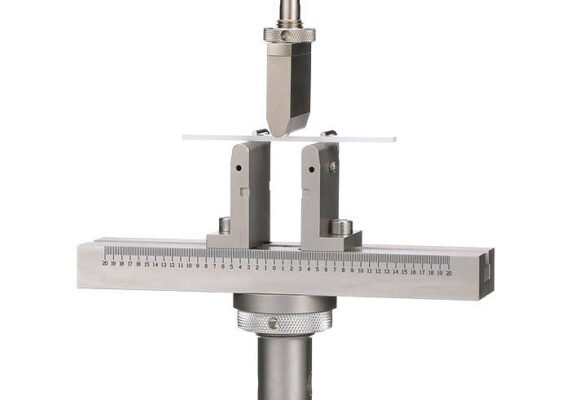
Your complete guide to ASTM D790 flexural testing at Kiyo R&D Lab
ASTM D790 is the standard test method for the flexural properties of unreinforced and reinforced plastics. A rectangular bar is supported at two points and loaded in the middle — a three-point bend — while the force and deflection are recorded. From that curve, astm d790 flexural testing gives the flexural strength (stress the material withstands in bending) and the flexural modulus (its stiffness).
The method defines two procedures: Procedure A uses a slow strain rate for materials that break at small deflections, while Procedure B uses a faster rate for more flexible ones. Choosing the right procedure and span-to-depth ratio is key to results that compare correctly against a specification.
Our astm d790 flexural testing captures the full set of bending properties your specification calls for.
Stress at break or yield.
Stiffness in bending.
For non-breaking samples.
Full bending curve.
Correct strain rate.
Lot-to-lot consistency.
| Parameter | Typical Setup |
|---|---|
| Loading | Three-point bend |
| Span-to-depth | 16:1 (typical) |
| Procedure A | 0.01 mm/mm/min strain rate |
| Procedure B | 0.10 mm/mm/min strain rate |
| Specimen | Rectangular bar, per thickness |
Setup values are typical; exact span, rate, and specimen size follow the current ASTM D790 standard and your material thickness.
Our astm d790 flexural testing sits alongside related flexural and mechanical methods, so results are accepted by auditors, buyers, and regulators alike.
ASTM ISO
| Standard | Scope |
|---|---|
| ASTM D790 | Flexural properties of plastics |
| ISO 178 | Flexural — ISO equivalent |
| ASTM D6272 | Four-point bend flexural |
| ASTM D638 | Tensile properties (companion) |
| ASTM D7264 | Flexural of composites |
Pair D790 flexural with D638 tensile and impact testing for a complete mechanical profile of your plastic — ask for a combined package.
Based in Chennai with branches in Chrompet and Oragadam, Kiyo R&D Lab makes plastic flexural testing easy to access for the Chennai–Oragadam industrial corridor, with convenient drop-off and courier-friendly collection.
Looking for astm d790 flexural testing? Our facilities measure flexural strength and modulus of plastics and composites with clear, accurate reporting.
Call 90420 86986 Request a QuoteExplore all our capabilities at www.kiyorndlab.com.
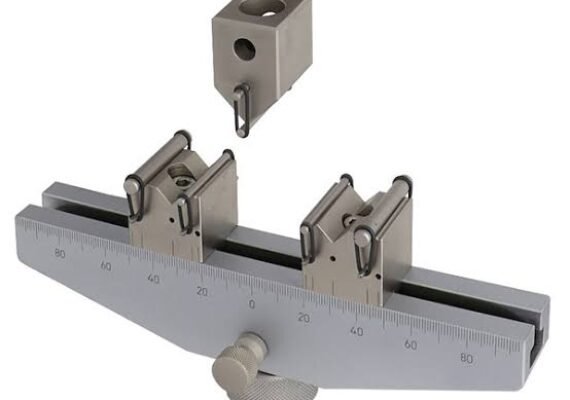
Flexural strength and stiffness decide whether a part performs or fails in service. With accurate astm d790 flexural testing, we combine correct specimen preparation, the right procedure, and expert interpretation to give you data you can stand behind.
From a single flexural check to a full mechanical profile across tensile, flexural, and impact, the team at Kiyo R&D Lab is ready to help. Reach out today and turn your sample into a reliable, audit-ready report.