Some of the biggest answers in science and manufacturing hide in the smallest places — a micro-crack, a contaminant particle, a coating defect invisible to the human eye. That’s where Scanning Electron Microscope (SEM) analysis comes in, magnifying your sample thousands of times to reveal exactly what’s going on at the micro and nano level.
At Kiyo R&D Lab, with two advanced facilities in Chennai — Chrompet and Oragadam — we provide high-resolution SEM analysis for failure investigation, material characterisation, quality control, and R&D. Let’s zoom in. 🔬
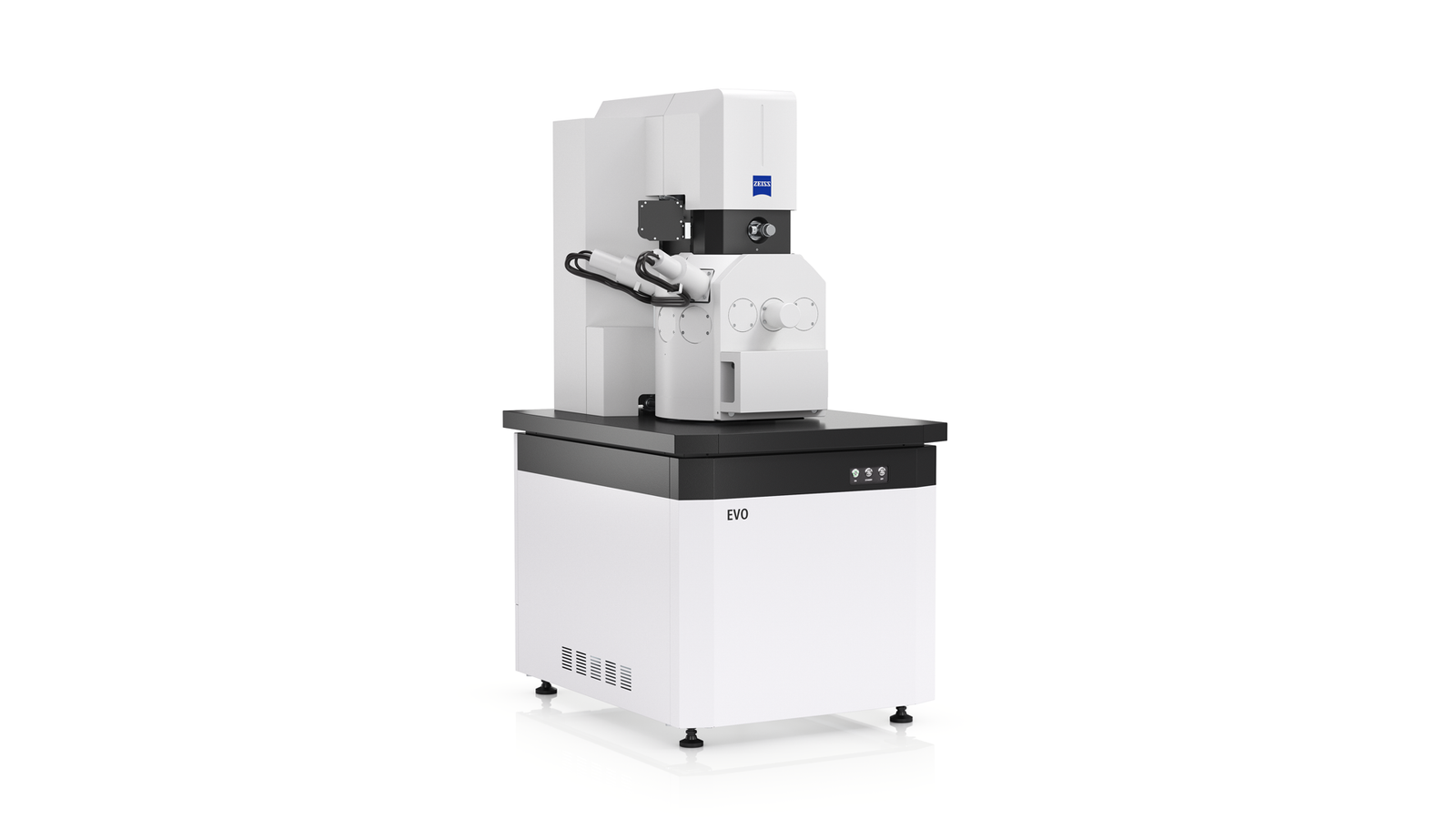
A regular optical microscope uses light to magnify objects — but light has its limits. A Scanning Electron Microscope uses a focused beam of electrons instead, scanning across the surface of your sample. As electrons interact with the material, detectors capture the signals and build a stunningly detailed, high-depth image of the surface.
The result? Magnifications from a few hundred times up to 100,000x and beyond, with crisp detail that lets you see grain structures, fracture surfaces, coatings, particles, fibres, and defects that no optical microscope can resolve.
Texture, roughness, grain size, porosity, and coating uniformity of your material’s surface.
Identify whether a part failed due to fatigue, brittle fracture, corrosion, or manufacturing defects.
Spot foreign particles, inclusions, and residues that affect product quality and performance.
Measure micro and nano particles, fibres, and powders with precise dimensional analysis.
SEM analysis isn’t just for research scientists — it’s a practical problem-solving tool for almost every industry:
| Industry | How SEM Helps |
|---|---|
| Automotive & Aerospace | Weld quality, fracture surfaces, coating analysis, component failure investigation |
| Electronics & Semiconductors | PCB defects, solder joint inspection, bond wire analysis, contamination checks |
| Metals & Manufacturing | Grain structure, corrosion study, surface treatment verification, inclusion analysis |
| Polymers & Composites | Fibre-matrix bonding, filler dispersion, fracture morphology, delamination study |
| Pharma & Healthcare | Particle characterisation, powder morphology, drug formulation studies |
| Textiles & Coatings | Fibre structure, coating thickness, surface finish, wear analysis |
| Academia & R&D | Research publications, PhD projects, new material development, nano studies |
Want to know not just what your sample looks like but also what it’s made of? Our SEM is paired with EDS (Energy Dispersive X-ray Spectroscopy), which identifies the chemical elements present at any point on your sample.
Example: A mysterious particle caused a coating defect on your product. SEM shows you its exact size and shape, while EDS tells you it contains iron and sulphur — instantly pointing you to the contamination source in your process. That’s the power of SEM + EDS together.
Located in Chrompet, Chennai — easily reachable for clients from South Chennai, Tambaram, Pallavaram, Guindy, and nearby industrial areas.
Situated in Oragadam, Chennai — right inside Tamil Nadu’s automotive and manufacturing hub, ideal for OEMs and industrial suppliers.
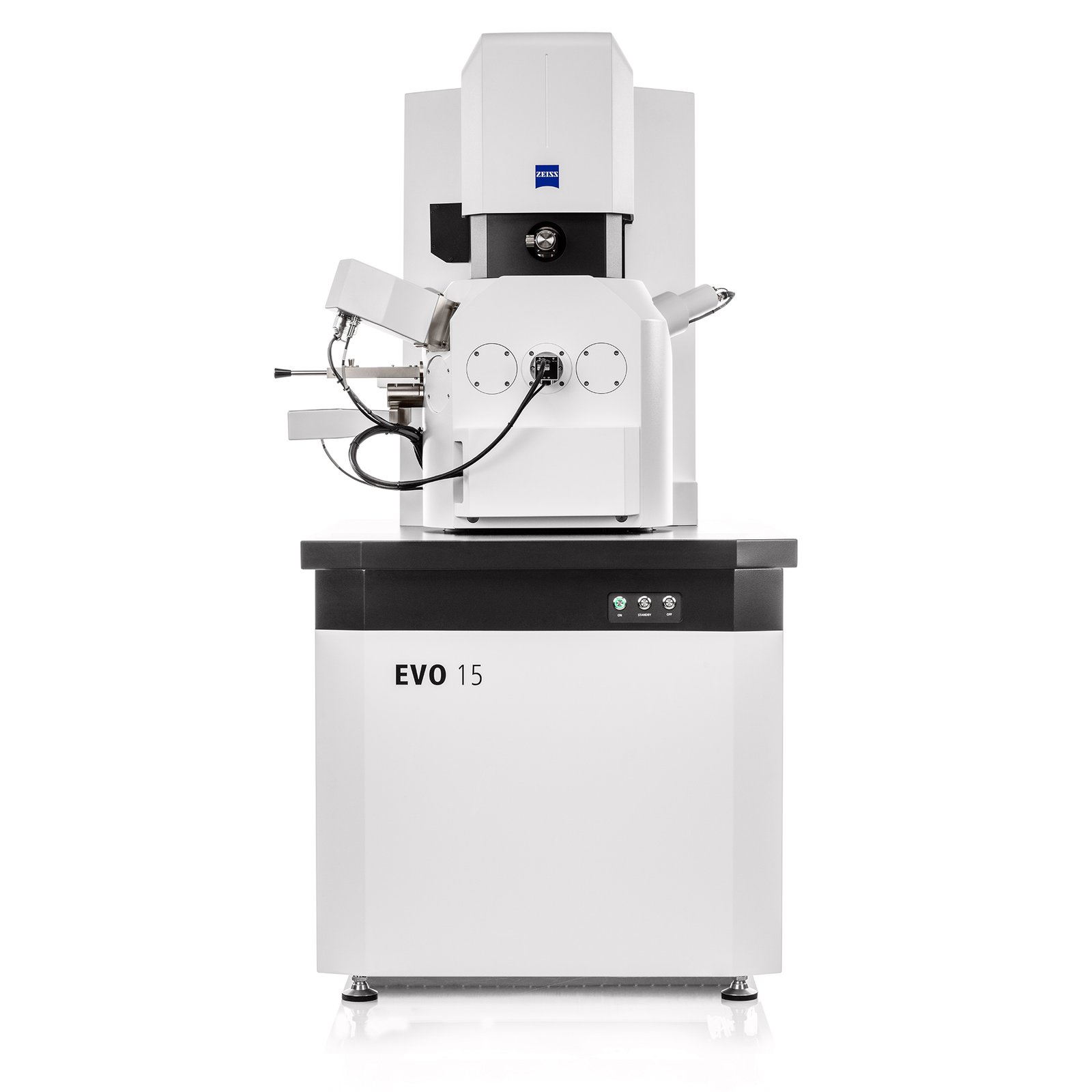
When the answer is hiding at the micro level, guessing is expensive — SEM analysis shows you the truth in stunning detail. With advanced SEM + EDS facilities, expert interpretation, and two convenient labs at Chrompet and Oragadam, Kiyo R&D Lab is Chennai’s trusted partner for microscopic analysis.
SEM analysis is used to study surfaces at very high magnification — for failure analysis, contamination identification, coating inspection, particle characterisation, fracture studies, and material research. It reveals details that ordinary optical microscopes simply cannot capture.
An optical microscope uses light and typically magnifies up to around 1,000x. A SEM uses an electron beam, achieving magnifications of 100,000x or more with far greater depth of field — so you can see micro-cracks, nano-particles, and surface textures in sharp 3D-like detail.
We analyse metals, polymers, composites, ceramics, coatings, powders, fibres, electronic components, biological/dried specimens, and more. Non-conductive samples are sputter-coated with a thin conductive layer before imaging — we handle all the preparation for you.
EDS (Energy Dispersive X-ray Spectroscopy) identifies the chemical elements present in your sample. If you need to know what a particle, deposit, or layer is made of — not just how it looks — SEM with EDS is highly recommended, especially for contamination and failure investigations.
Simply pack your sample safely and drop it at our Chrompet or Oragadam lab, or courier it to us. Before sending, call 90420 86986 so our team can advise you on sample size, quantity, and handling.
Turnaround depends on the number of samples and the depth of analysis required, but most SEM reports are delivered quickly after sample receipt. For urgent failure investigations, let us know — we prioritise time-critical jobs.
Absolutely! We regularly support PhD scholars, M.Tech/M.E. students, and research institutions with SEM imaging and EDS data for journals, theses, and projects — at student-friendly pricing with publication-quality images.
It’s easy — tap to call 90420 86986 / 90876 86986, visit www.kiyorndlab.com, or 💬 request a quote on WhatsApp and we’ll respond promptly.