AUTOMOTIVE INTERIOR MATERIALS GUIDE
Ever noticed a greasy, hazy film on the inside of a car windscreen that will not wipe off easily? That film is “fogging” – volatile substances such as plasticisers, oligomers, additives and lubricants that evaporate from warm interior trim materials and condense on the cooler glass. Besides looking bad, it scatters light and reduces the driver’s visibility, especially against low sun or oncoming headlights at night.
That is why almost every car maker specifies a fogging test for dashboards, door trims, seat covers, headliners, carpets, foams and adhesives. In this guide, Kiyo R&D Lab explains the three key standards – SAE J1756, ISO 6452 and DIN 75201 – how the reflectometric and gravimetric methods work, what the results mean and how suppliers in Chennai and Sriperumbudur can pass OEM requirements first time.
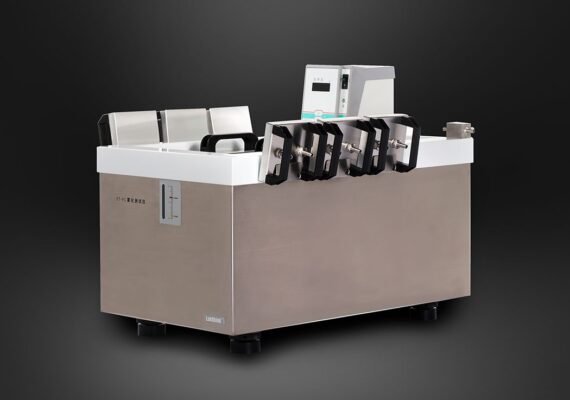
SAE J1756, ISO 6452 and DIN 75201 explained
A parked car in the Indian summer can see dashboard surface temperatures climb well above 80 °C. At these temperatures, low-molecular-weight substances inside polymer materials start to evaporate. When the vapour reaches the cooler windscreen, it condenses into a thin film of droplets or an oily layer.
Phthalates and other plasticisers in PVC skins and artificial leather are the classic source.
Antioxidants, stabilisers, slip agents and short polymer chains migrate to the surface.
Release agents, lubricants, solvents, adhesive and PU foam catalyst residues.
A fogging test recreates this situation in the laboratory under tightly controlled temperature and time so that different materials, suppliers and batches can be compared on a fair basis – long before a customer complains about a smeared windscreen.
All three standards share the same basic principle – heat a specimen in a closed beaker and collect what evaporates on a cooled surface – but they come from different regions and are called up by different OEMs.
SAE J1756 ISO 6452 DIN 75201 OEM Specs
| Standard | What It Covers | Typical Use |
|---|---|---|
| SAE J1756 | Fogging characteristics of interior automotive materials; reflectance-based and gravimetric evaluation | North American OEMs and their global supply chains |
| ISO 6452 | Fogging characteristics of trim materials in the interior of automobiles, including rubber- or plastics-coated fabrics; reflectometric and gravimetric methods | International and Asian OEMs, coated fabric and leatherette suppliers |
| DIN 75201 | Fogging behaviour of interior trim materials; Method A (reflectometric) and Method B (gravimetric) | German and European OEMs – the most widely referenced method |
| OEM specifications | Company methods such as GMW3235 and Ford FLTM BO 116-03, which adapt or reference the above | Part-level approvals, PPAP and material release |
In practice, the typical conditions are very similar across the three: the specimen is heated at 100 °C while the collecting surface is held at about 21 °C. The main differences lie in specimen preparation, conditioning, exposure time, how results are calculated and the acceptance limits set by each OEM – so always test to the exact standard and edition named on your drawing.
The vapour condenses on a cooled glass plate placed over the beaker. The plate’s gloss/reflectance is measured with a reflectometer (typically at 60°) before and after exposure.
Result: Fogging value F in % – the ratio of reflectance after fogging to the clean reference.
Reading it: Higher is better. 100% means no visible fog; many OEMs call for values of 70–90% or more.
The vapour condenses on a weighed, cooled aluminium foil disc over a longer exposure period (commonly 16 hours). The foil is re-weighed after exposure.
Result: Condensable mass G in milligrams.
Reading it: Lower is better. Limits of 1–2 mg are common for visible interior parts, though each OEM sets its own value.
The two methods complement each other. Reflectometric results show how the fog looks to the driver, while gravimetric results measure the actual quantity of condensable material – useful because some oily films barely scatter light yet still leave a heavy deposit.
Specimen cutting: Circular specimens, typically 80 mm in diameter, are cut from the material. Thick parts may be trimmed to the maximum thickness allowed by the standard, keeping the visible surface facing up.
Conditioning: Specimens are conditioned or dried as the standard requires so that moisture does not condense and give a false result.
Loading the beakers: Each specimen is placed at the bottom of a clean glass beaker, which is closed with a sealing ring and either a glass plate or an aluminium foil disc.
Heating and cooling: The beakers sit in a thermostatically controlled bath at 100 °C while cooling plates hold the glass or foil at about 21 °C – typically 3 hours for the reflectometric method and 16 hours for the gravimetric method.
Measurement: Glass plates are measured on the reflectometer against reference plates; aluminium foils are re-weighed on an analytical balance after re-conditioning.
Reporting: Results from multiple specimens are averaged and reported as F (%) or G (mg), together with test conditions, reference checks and a pass/fail statement against your specification limit.
Any material that sits inside the passenger compartment and can warm up in sunlight is a candidate for a fogging test. Kiyo R&D Lab regularly handles:
PVC, TPO and PU skins, slush-moulded and injection-moulded dashboards.
PVC and PU coated fabrics for seats, armrests and door inserts.
PP, ABS and PC/ABS moulded trims with textures and paints.
PU seat foams, backing foams and acoustic insulation.
Seat fabrics, headliners, floor carpets and parcel shelf covers.
Laminating adhesives, hot-melts and wiring harness tapes.
EPDM, TPE and TPV seals, grommets and mats.
Compounds, masterbatches and plasticisers screened before part production.
Fogging is closely linked to VOC emissions and interior odour, so many OEMs ask for these evaluations together. Running a fogging test early in development – at compound or sample-plaque stage – is far cheaper than failing at PPAP.
Explore related services: Automotive Plastics Testing Services, Thermal Accelerated Properties, Degradation Properties Testing and our Material Testing Laboratory.
Share your drawing or material specification and we will confirm the standard, method, number of specimens and sample size before you send parts.
Our main laboratory at Chitlapakkam, Chrompet – serving component makers across Chennai, Guindy, Ambattur, Tambaram and the southern suburbs.
Call Us WhatsApp UsRight inside the automotive manufacturing corridor – ideal for OEMs and Tier-1 and Tier-2 interior suppliers in Oragadam, Sriperumbudur and Irungattukottai.
Call Us WhatsApp UsExplore all our capabilities at www.kiyorndlab.com.
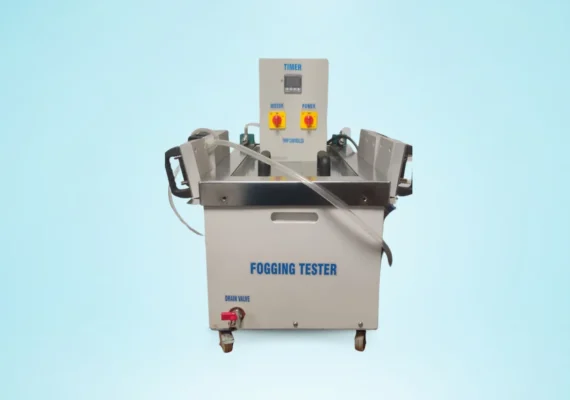
Windscreen fogging is a small film with big consequences – for driver visibility, perceived quality and OEM approval. SAE J1756, ISO 6452 and DIN 75201 give suppliers a reliable, repeatable way to measure it, and choosing the right standard and method from the start avoids costly re-tests and delayed part approvals.
Kiyo R&D Lab helps interior component makers across Chennai and Sriperumbudur with fogging test support alongside thermal, ageing, odour and material characterisation testing. Talk to our team about your material and specification today.