Your guide to FTIR identification testing at Kiyo R&D Lab
What is this material, and is it what it should be? When you need to put a name to an unknown polymer, additive, coating, or contaminant, ftir identification testing is the fastest reliable answer. It reads a material’s infrared fingerprint and matches it against reference spectra, turning an unknown into a confirmed identity. Kiyo R&D Lab uses FTIR to identify your materials accurately and report clearly.
From plastics and rubber to adhesives, coatings, and mystery residues, our expert team delivers accurate identification, supporting interpretation, and clear, audit-ready reports you can rely on.
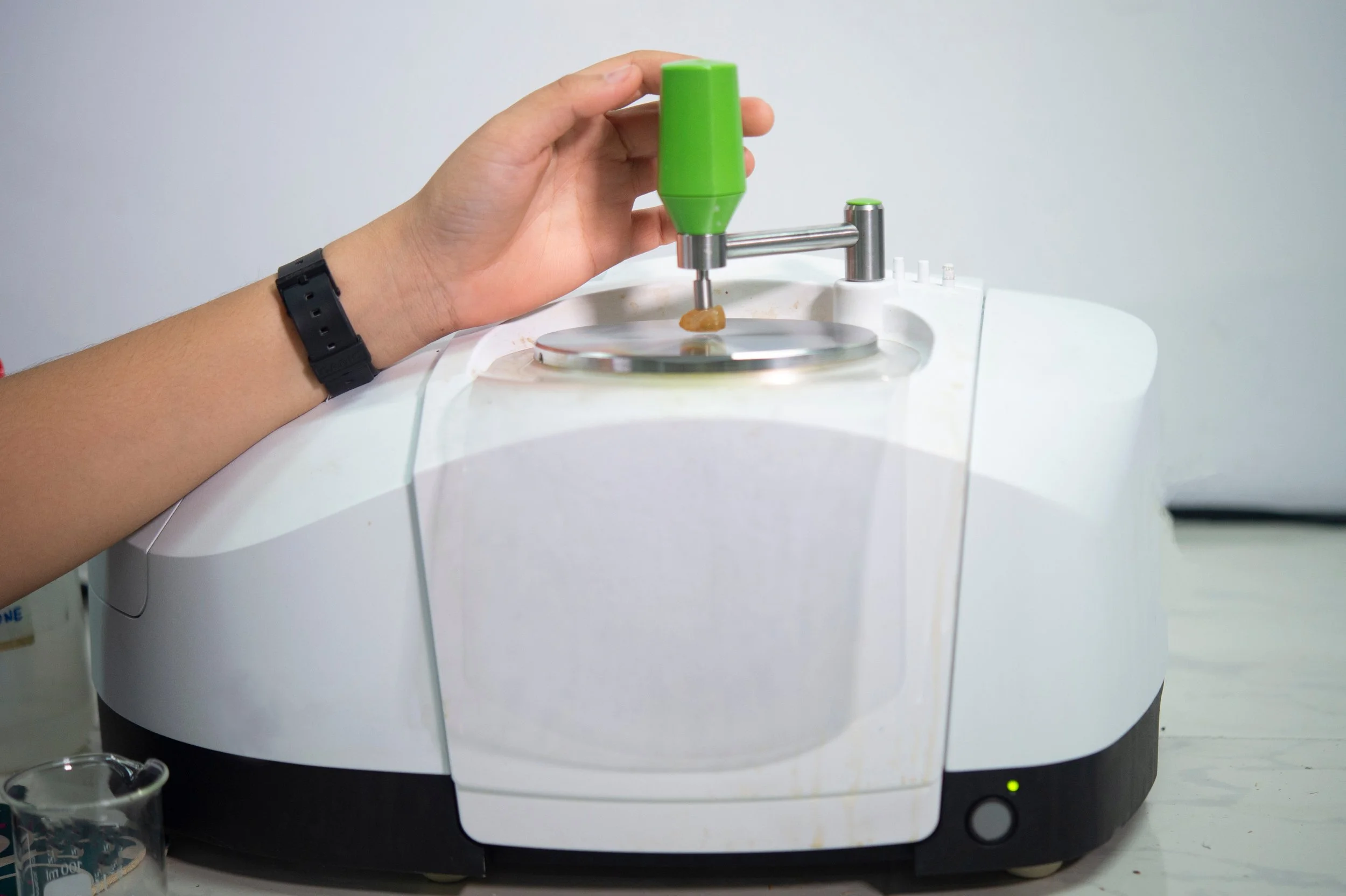
Every organic material absorbs infrared light in a pattern set by its chemical bonds — a spectrum that acts like a fingerprint. ftir identification testing records that spectrum and compares it against reference libraries to name the material. A strong match confirms identity; a partial match points to the closest family or reveals a blend or contaminant.
Because the technique is fast, needs only a tiny sample, and is highly specific for organic materials, it is the first tool most analysts reach for when the question is simply: what is this?
Our ftir identification testing covers a wide range of organic and polymer materials.
Base resin identity.
Base polymer type.
Resin / binder ID.
Foreign particles & stains.
Powders, films, residues.
Oxidation & ageing signs.
| Sample Type | What FTIR Confirms |
|---|---|
| Plastic part | Which polymer it is |
| Rubber compound | Base elastomer type |
| Coating / film | Resin or binder class |
| Particle / residue | Nature of the contaminant |
| Unknown solid/liquid | Closest spectral match |
Our ftir identification testing follows recognised methods, and pairs naturally with other analytical techniques when identity alone is not enough.
ASTM ISO
| Method / Test | Role |
|---|---|
| ASTM E1252 | General FTIR practice |
| ISO 4650 | Rubber identification by IR |
| TGA | Adds filler & composition |
| SEM-EDX | Adds elemental analysis (inorganics) |
| DSC | Confirms by thermal behaviour |
FTIR identifies organic materials; for inorganic particles or fillers we add SEM-EDX, and for a fuller profile we combine it with TGA or DSC — ask for a complete identification package.
Based in Chennai with branches in Chrompet and Oragadam, Kiyo R&D Lab makes material identification easy to access for the Chennai–Oragadam industrial corridor, with convenient drop-off and courier-friendly collection.
Need ftir identification testing? Send us your sample and tell us what you’re trying to identify, and we’ll run the analysis and report clearly.
Call 90420 86986 Request a QuoteExplore all our capabilities at www.kiyorndlab.com.
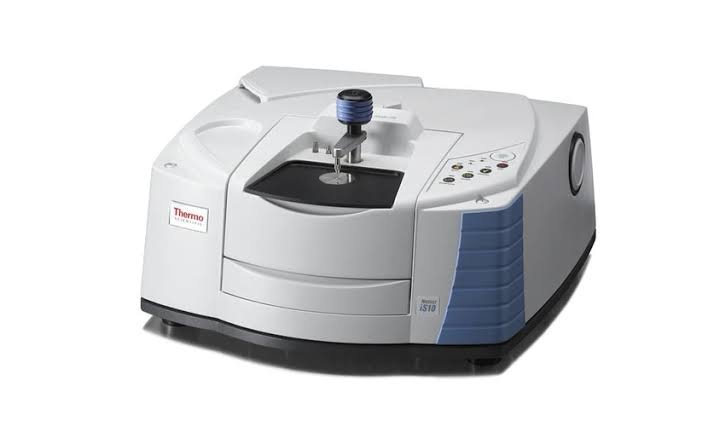
When you need to know exactly what a material is — to verify a supply, trace a contaminant, or solve a failure — ftir identification testing gives you a fast, reliable answer. We combine accurate spectra, reference matching, and expert interpretation to turn unknowns into confirmed identities.
From a single polymer ID to a full material investigation, the team at Kiyo R&D Lab is ready to help. Reach out today and turn your sample into a reliable, audit-ready report.