Fire safety compliance is no longer optional for electrical and electronic products. Whether you’re manufacturing home appliances, industrial switchgear, or automotive components, your product must prove it won’t ignite under thermal stress — and that proof starts with a glow wire test. At Kiyo R&D Lab, Chennai, we provide accurate, IEC 60695-certified glow wire testing with fast turnaround and reports your buyers and regulators will trust.
From GWFI testing for finished products to GWIT testing for raw materials — Kiyo R&D Lab covers it all under one roof, right here in Chennai.
At Kiyo R&D Lab, we’ve seen manufacturers in Chennai and across India scramble at the last minute because their electrical components failed a glow wire ignition test right before export. That’s a costly mistake — both in time and money. The better path? Get it right from the start with a reliable glow wire test lab in Chennai that treats your deadline like its own.
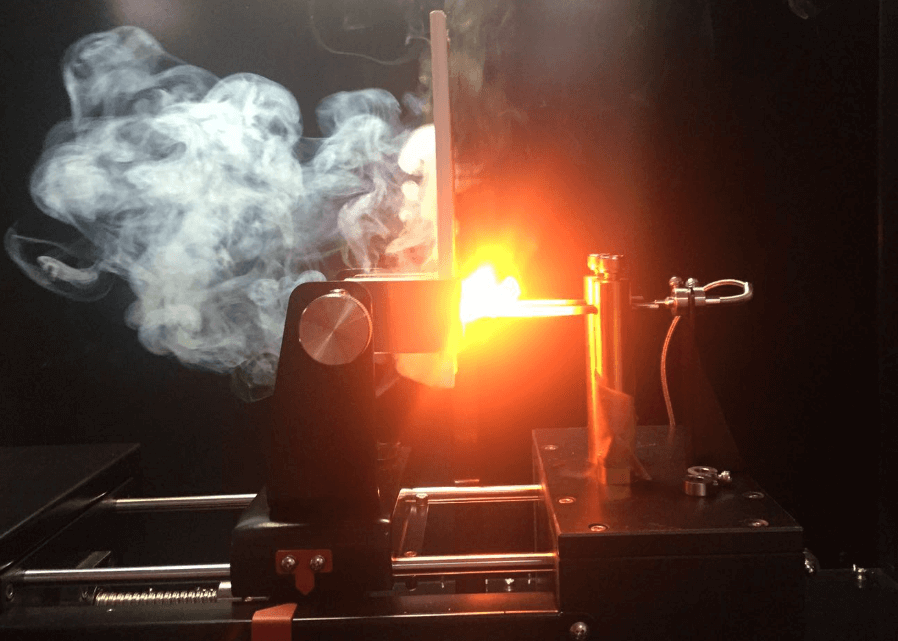
Glow wire testing simulates what happens when a component inside your electrical product is accidentally exposed to an overheated wire — the kind of thermal stress that can spark a real-world fire. It’s not theoretical. It’s the difference between a product that’s safe and one that’s a liability.
People often ask us, “What does the glow wire test actually involve?” — and it’s a fair question. Here’s the straightforward version.
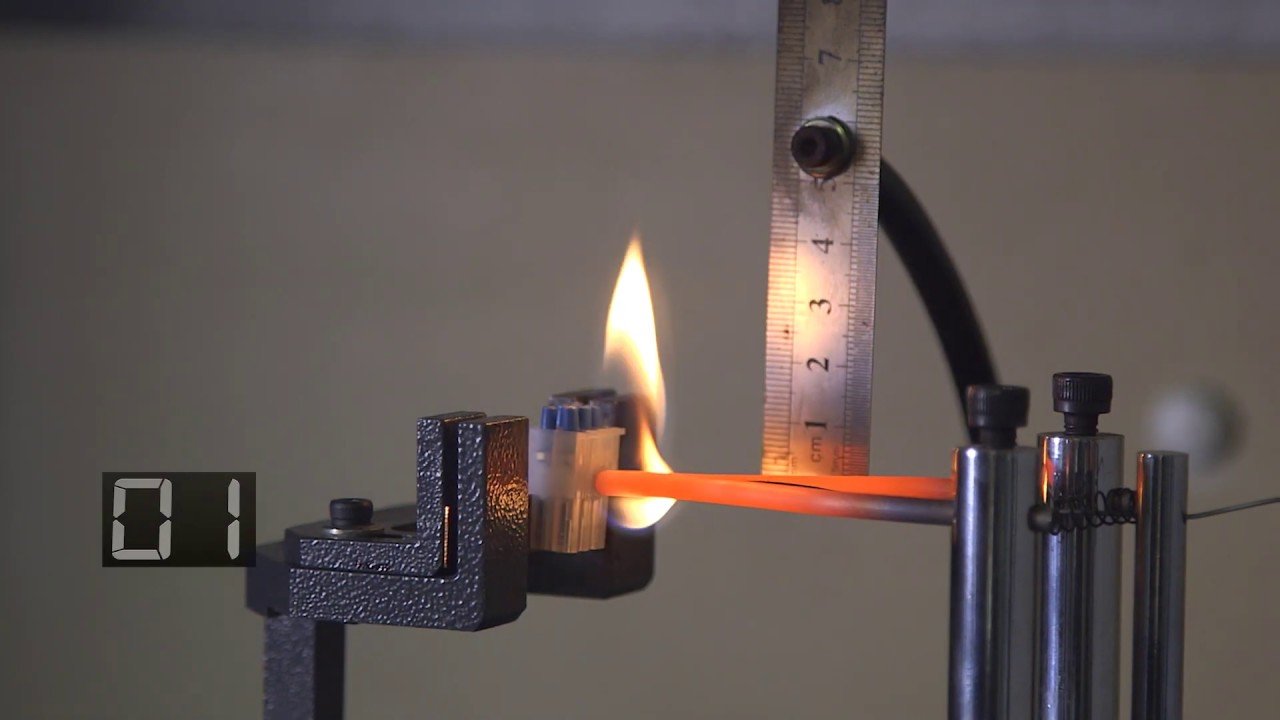
A glow wire — essentially a nickel/chromium loop — is heated to a specific temperature (anywhere between 550°C and 960°C, depending on the standard and application). This heated wire is then pressed against the test sample — usually an insulating part or housing of an electrical component — with a defined force for a set duration of typically 30 seconds.
After the wire is removed, the technician observes three critical things:
① Ignition behaviour — whether the material ignites and if any flame persists beyond 30 seconds.
② Particle drip — whether any flaming or glowing particles fall and ignite the tissue paper placed beneath the sample.
③ Key indices — the Glow Wire Flammability Index (GWFI) and Glow Wire Ignition Temperature (GWIT) — two critical metrics that determine whether your product meets the required safety threshold.
At Kiyo R&D Lab, our glow wire test services in Chennai are conducted by experienced engineers who document every detail — giving you a report that holds up under any regulatory or client scrutiny.
Standards matter. When a client in Europe or North America asks for your compliance report, the first thing they check is which standard was followed. Our glow wire testing laboratory in Chennai is equipped to test against all internationally recognized standards:
| Standard | Scope |
|---|---|
| IEC 60695-2-10 | Glow Wire Test Methods – General overview and apparatus requirements |
| IEC 60695-2-11 | Glow Wire Flammability Test (GWFI) for End Products |
| IEC 60695-2-12 | Glow Wire Flammability Test (GWFI) for Materials |
| IEC 60695-2-13 | Glow Wire Ignition Temperature Test (GWIT) for Materials |
| IS/IEC Standards | Applicable standards for Indian domestic market compliance |
Whether you need GWFI testing for a finished product or GWIT certification for raw polymeric material, Kiyo R&D Lab has the setup, the calibrated equipment, and the expertise to deliver results you can stand behind — for any market, any buyer, any audit.
One of the things we’re proud of at Kiyo R&D Lab is the diversity of clients who trust us with their glow wire compliance testing in Chennai. This isn’t a one-sector service — fire safety cuts across every industry that puts electricity near plastic.
PCB housings, terminal blocks, connectors, switches — if it carries current, it needs glow wire certification.
Washing machines, ACs, water heaters, mixer grinders — every plastic part near a heating element must be tested.
In-vehicle electrical systems, EV battery housing, fuse boxes — rigorous glow wire compliance is non-negotiable.
Control panels, switchgear enclosures, relay housings — industrial-grade fire safety validation done precisely.
LED drivers, lamp holders, luminaire bodies — the lighting industry is heavily regulated under glow wire standards.
Power adapters, server racks, networking equipment — global tech companies demand stringent fire safety documentation.
We could talk about our equipment. We could talk about our accreditations. But honestly, the reason clients keep returning to us is simpler than that — we make their job easier.
We know product launches don’t wait. Our glow wire test reports are delivered on time — often faster than clients expect — without compromising accuracy or detail.
Every data point is explained, every pass/fail criterion is referenced to the applicable standard, and failure reports include structured observations that help your design team course-correct quickly.
Before testing begins, our engineers review your product, the applicable standard, and the expected temperature range — saving you from unnecessary test iterations and wasted sample runs.
Your product design and test data stay with us — period. We operate under strict confidentiality protocols that our OEM and export-focused clients specifically value.
Glow wire testing often pairs with needle flame, ball pressure, or tracking resistance (CTI) testing. At Kiyo R&D Lab, one lab handles it all — fewer vendors, fewer delays, cleaner documentation.
We believe the testing process should never feel like a black box. Here’s exactly how a glow wire test engagement at Kiyo R&D Lab in Chennai works — from sample drop-off to final report in your inbox:
You share your product samples and the applicable standard — or let us help identify it. Our team confirms the test plan with you before anything moves forward.
As required by IEC standards, samples are conditioned at specified temperature and humidity levels before testing begins — no shortcuts taken, ever.
Our calibrated glow wire apparatus is set to the required temperature. The test is conducted by trained technicians with real-time observation and full documentation at every stage.
Ignition, flame duration, and particle drip behaviour are carefully recorded. Pass/fail criteria are evaluated against the applicable standard — nothing is left to interpretation.
You receive a comprehensive test report — complete with test conditions, observations, photographs, and the final compliance verdict. Most glow wire test reports are delivered within 3–5 working days.
Choosing the right testing partner is as important as the test itself. At Kiyo R&D Lab, we deliver accurate glow wire test lab services in Chennai with fast turnaround, IEC 60695-certified procedures, and reports that stand up to any buyer or regulatory review — so your product reaches the market with confidence, not uncertainty.