What Exactly is Fatigue Testing?
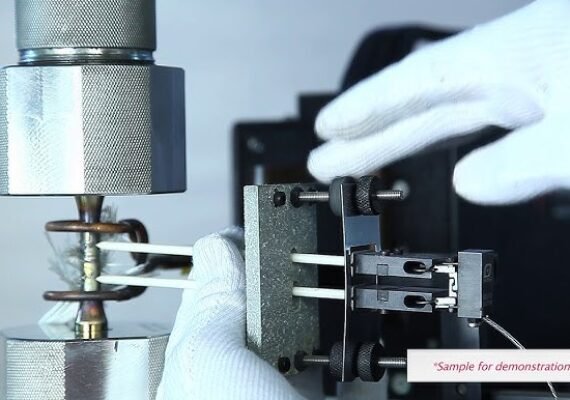
Fatigue testing is the laboratory process of determining how long a material or component will survive when subjected to repetitive forces.
Think of it as putting a part through several years of its intended life—whether it’s a million twists, bends, or pulls—in a matter of days or weeks.
The goal is to identify the Endurance Limit (the stress level below which the material can theoretically withstand an infinite number of cycles) or, more practically, to determine the expected lifespan at a specific, real-world operating stress level.
The Problem: Why Static Tests Aren’t Enough
- Static Failure (Yield/Tensile Test): Measures the single load required to break a part. This is easy to calculate but rarely represents real life.
- Fatigue Failure (Cyclic Test): The material fails at a stress level far below its static strength. A component might survive a single push at 100 kg, but fail after 10,000 pushes at just 30 kg. This slow damage is impossible to predict without specialized testing.
Why Fatigue Testing is a Critical Service in India
As India’s manufacturing sector targets global markets and focuses on high-reliability industries like automotive and aerospace, certified fatigue data is non-negotiable for three key reasons:
- Safety & Certification: In industries governed by strict compliance (e.g., ISO, ASTM, Defense Standards), proof of fatigue endurance is required to prevent accidents, especially in load-bearing structures like bridges, aircraft fuselages, and heavy machinery.
- Warranty & Cost Control: A product failure in the field, caused by poor fatigue life, leads to expensive warranty claims, recalls, and reputational damage. Accurate testing minimizes this costly risk and protects your brand.
- Optimization: Fatigue data allows engineers to use the most cost-effective material possible, rather than over-engineering parts unnecessarily, while still guaranteeing the required lifespan and performance.
Key Fatigue Test Methods at Kiyo R&D Lab
Kiyo R&D Lab maintains specialized equipment and expertise to simulate various real-world stresses. When you utilize fatigue testing lab services in india – Kiyo R&D Lab, you gain access to these core test types:
1. Axial (Tension-Compression) Fatigue
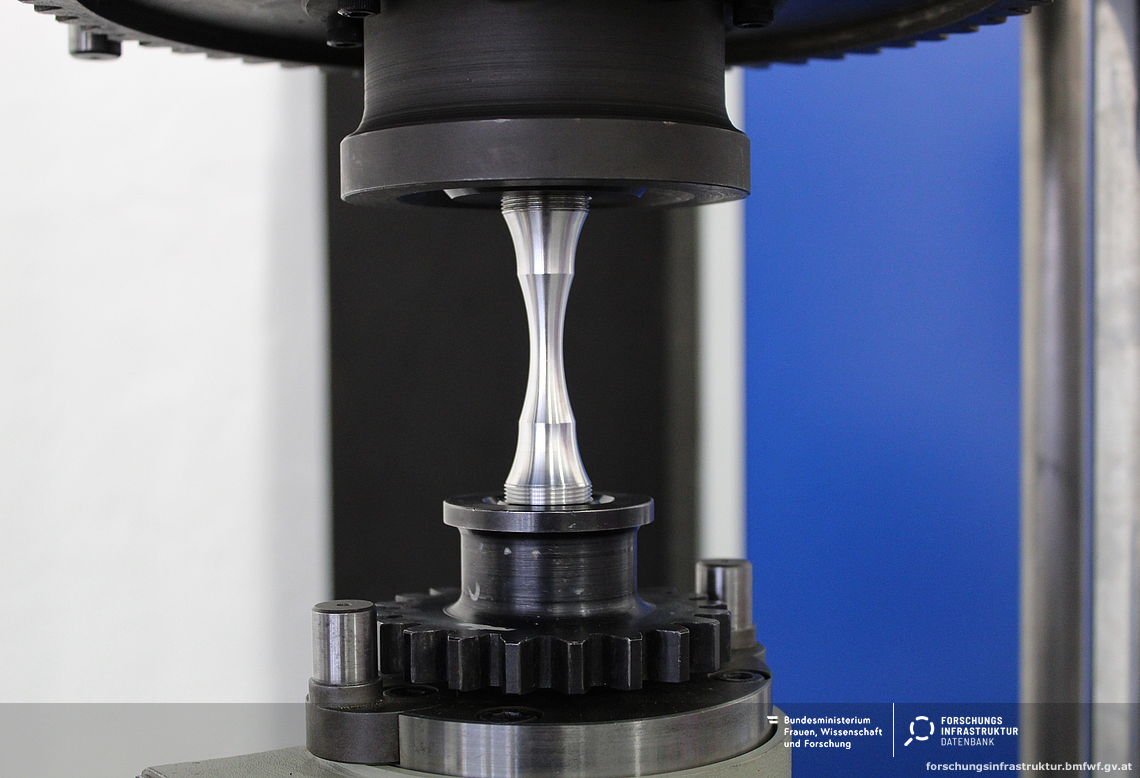
- What it does: The most common form of fatigue test, subjecting the specimen to alternating pushing (compression) and pulling (tension) forces along a single axis. This mimics components like piston rods, shafts, or structural members.
- The Result: Provides crucial data on the material’s strength under alternating stress cycles, directly correlating to its operational lifespan.
2. Flexural/Bending Fatigue
- What it does: Applies repetitive bending stress to a specimen (often a beam or flat material) until failure. This simulates components that constantly flex, such as springs, brackets, and electronic connections.
- The Result: Essential for thin materials and components where movement causes repeated stress on outer surfaces, leading to eventual failure.
3. Rotational Bending Fatigue
- What it does: Used specifically for components that spin or rotate (like axles, shafts, and connecting rods). As the shaft rotates while under a constant load, every point on the surface cycles repeatedly from maximum tension to maximum compression.
- The Result: This test is vital for rotating machinery where fatigue failure is most common and potentially dangerous.
4. High Cycle Fatigue (HCF) vs. Low Cycle Fatigue (LCF)
- HCF: Tests focused on high stress cycles (millions of cycles) at relatively low loads, typical for high-speed machinery or components designed for infinite life (e.g., automotive engine parts, aerospace structures).
- LCF: Tests focused on lower cycles (thousands of cycles) at very high loads, often found in parts that undergo occasional high-stress events, such as during startup/shutdown in power plants or in landing gear components.
The Kiyo R&D Lab Advantage in Fatigue Testing
Choosing the right partner for fatigue testing lab services in india is crucial, as accuracy is measured over millions of cycles. Kiyo R&D Lab provides the reliability and insight your complex projects require:
1. NABL / ISO 17025 Accreditation
Our lab operations adhere to the highest international standards, certified by NABL/ISO 17025. This ensures that every test is performed using calibrated equipment and rigorous protocols, making your fatigue reports globally defensible and reliable for certification and compliance with major industry standards.
2. State-of-the-Art Electromechanical Systems
We utilize modern, precise fatigue testing machines capable of applying loads accurately across millions of cycles without drift. This technology is essential for generating reliable S-N curves (Stress vs. Cycles to Failure curves)—the backbone of lifespan prediction and material characterization.
3. Consultative Failure Analysis
Our experts don’t just stop at the failure number. When a sample breaks, our metallurgists and engineers analyze the fracture surface (often using microscopic techniques) to determine the root cause, crack initiation point, and propagation rate. This consultation helps your design team make targeted, informed material changes and prevent future failures.
4. Integrated Material Characterization
Fatigue life is influenced by material microstructure, surface finish, and thermal exposure. At Kiyo R&D Lab, we can seamlessly combine fatigue testing with hardness testing, microstructure analysis, and thermal testing to provide a holistic view of why your component performs the way it does, offering deeper insights for material development.