Have a product that works but no formulation, no spec sheet, and a supplier you can no longer rely on? Reverse engineering the material tells you exactly what it is made of — so you can re-source it, reproduce it, or improve on it. material reverse engineering services break a sample down into its base polymer, fillers, and additives using analytical testing, turning an unknown material into a documented, repeatable recipe. Kiyo R&D Lab decodes the composition of your material so you can move forward with confidence.
From plastics and rubber to coatings, adhesives, and composites, our expert team delivers accurate composition data, supporting analysis, and clear, audit-ready reports you can rely on.
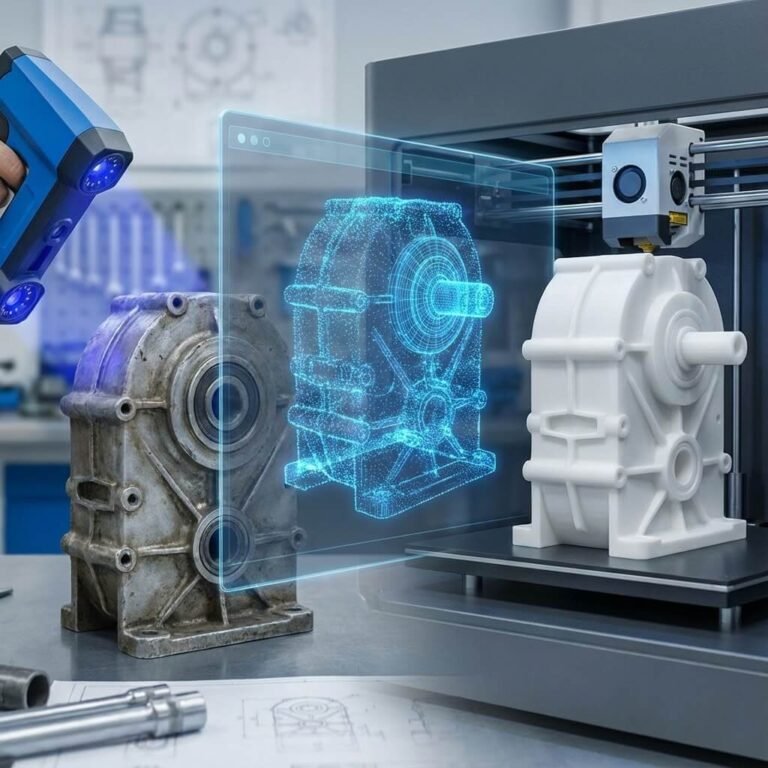
Your complete guide to material reverse engineering at Kiyo R&D Lab
Material reverse engineering — often called deformulation — is the process of working out what an existing material is made of. Instead of dimensions and CAD, the focus is chemistry: the base polymer or resin, the fillers and reinforcements, the additives, and any coatings. Analytical material reverse engineering services combine several techniques to rebuild that recipe from a finished sample.
Why do it? To re-source a discontinued material, qualify a cheaper alternative, troubleshoot a quality problem, benchmark a competitor’s product, or recreate something whose formulation was never documented. The result is a clear picture of composition you can act on.
Our material reverse engineering services bring several analytical methods together, because no single test reveals a full formulation on its own.
Identify base polymer.
Polymer, filler & ash split.
Melting & crystallinity.
Filler & elemental map.
Inorganic loading.
Confirm the match.
| Question | Technique |
|---|---|
| What is the base polymer? | FTIR, DSC |
| How much filler / additive? | TGA, ash content |
| What is the filler made of? | SEM-EDX |
| Is there a coating / layer? | FTIR, SEM cross-section |
| Does the copy perform the same? | Mechanical / thermal testing |
Good material reverse engineering services follow a logical sequence, layering techniques so each result guides the next — and every finding is backed by a recognised test method.
ASTM ISO
| Step | What Happens |
|---|---|
| 1. Sample review | Understand the part & your goal |
| 2. Polymer ID | FTIR / DSC to identify the base |
| 3. Composition | TGA, ash & SEM-EDX for fillers |
| 4. Correlation | Build the likely formulation |
| 5. Report | Composition & findings, clearly |
Each underlying test follows recognised ASTM and ISO methods, so the composition data is accurate and defensible.
Based in Chennai with branches in Chrompet and Oragadam, Kiyo R&D Lab makes expert deformulation easy to access for the Chennai–Oragadam industrial corridor, with convenient drop-off and courier-friendly collection.
Looking for material reverse engineering services? Send us your sample and what you want to achieve, and our team will decode its composition and report clearly.
Call 90420 86986 Request a QuoteExplore all our capabilities at www.kiyorndlab.com.
When a formulation is lost, a supplier disappears, or a competitor’s material outperforms yours, guesswork will not get you there. Our material reverse engineering services combine multiple analytical techniques with expert interpretation to give you a composition you can act on.
From a single unknown sample to a full deformulation project, the team at Kiyo R&D Lab is ready to help. Reach out today and turn a mystery material into a documented, repeatable recipe.