When you need to know what a material is made of without destroying the sample, Raman spectroscopy for chemical analysis is one of the most powerful tools available. It reads the molecular fingerprint of a substance — identifying compounds, phases, and contaminants from a tiny sample, often with no preparation at all. At Kiyo R&D Lab, we use this technique to give manufacturers, researchers, and quality teams fast, non-destructive answers.
Whether you are verifying an incoming material, investigating an unknown particle, or confirming a polymorph, Raman spectroscopy for chemical analysis delivers precise molecular identification. Our team turns raw spectra into clear, defensible reports you can act on with confidence.
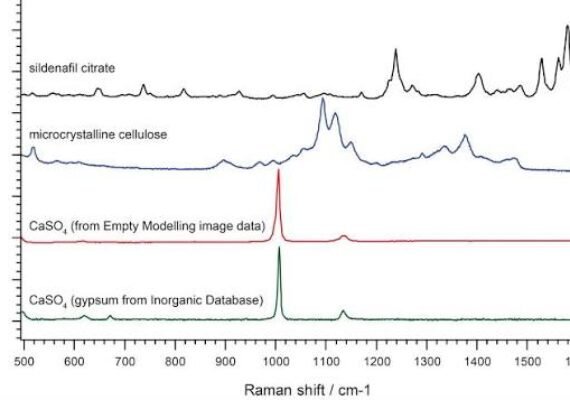
Your guide to Raman analysis at Kiyo R&D Lab
A Raman spectrum is a molecular fingerprint — each peak maps to a specific chemical bond. That makes Raman spectroscopy for chemical analysis uniquely good at telling very similar materials apart, including crystal forms that look identical under a microscope. The table below shows what the technique delivers.
| Capability | What It Tells You |
|---|---|
| Molecular identification | Confirms compound identity from its fingerprint |
| Polymorph / phase ID | Distinguishes crystal forms of the same compound |
| Contaminant & particle ID | Identifies unknown specks and inclusions |
| Non-destructive testing | Sample is preserved for further work |
| Minimal preparation | Works on solids, powders & many liquids as-is |
Because Raman and FTIR are complementary, we often pair them: Raman excels at symmetric bonds and inorganic phases, while FTIR covers polar groups — together they give a near-complete molecular picture.
The real strength of Raman spectroscopy for chemical analysis is speed with specificity: a reliable identification in minutes, often through packaging or without touching the sample. For labs that need to confirm identity, screen for counterfeits, or map a contaminant, it is hard to beat.
At Kiyo R&D Lab, Raman spectroscopy for chemical analysis is backed by careful spectral interpretation — not just a machine reading, but an expert explaining what the result means for your material.
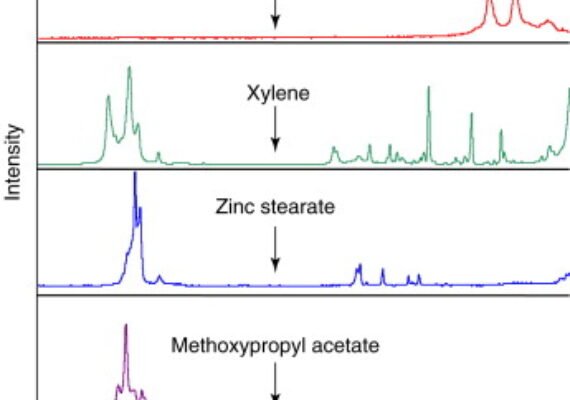
When you need a confident molecular answer fast — and you need the sample back intact — Raman spectroscopy for chemical analysis at Kiyo R&D Lab delivers. From polymorph screening to contaminant identification, with expert spectral interpretation and NABL-accredited reporting where applicable, you get results you can defend.
Send us your sample and the question you need answered, and our team will choose the right approach and get you clear results fast.
Call: 90420 86986 | 90876 86986
Web: www.kiyorndlab.com
Our Raman spectroscopy for chemical analysis serves a wide range of industries that need fast, non-destructive molecular identification. Accredited reporting is available for methods within our NABL scope; we confirm the exact status for your sample before you commit.
Both read molecular vibrations, but they respond to different bonds. Raman spectroscopy for chemical analysis is strong on symmetric and inorganic bonds and needs little prep; FTIR excels at polar groups. Used together they cover more of the molecule.
No. Raman is non-destructive in most cases, so your sample is preserved for further testing — a key reason labs choose it for rare or high-value materials.
Solids, powders, many liquids, and particles — often with no preparation. As part of our Raman spectroscopy for chemical analysis we advise on the best approach for your specific sample type.
Straightforward identifications are often quick once the sample is received; complex interpretation or spectral library work may take longer. We share a clear timeline when we scope your job.