
You need to analyse a polymer, but which technique actually answers your question — FTIR, DSC, or TGA? Choosing the wrong one wastes time and money; choosing the right one gets you a clear answer fast. This guide to ftir vs dsc vs tga explains what each technique measures, the questions each one answers, and how to pick the right test for your polymer.
And when you know which you need, Kiyo R&D Lab in Chennai can run it — FTIR, DSC, and TGA under one roof, with accurate data and clear reporting.
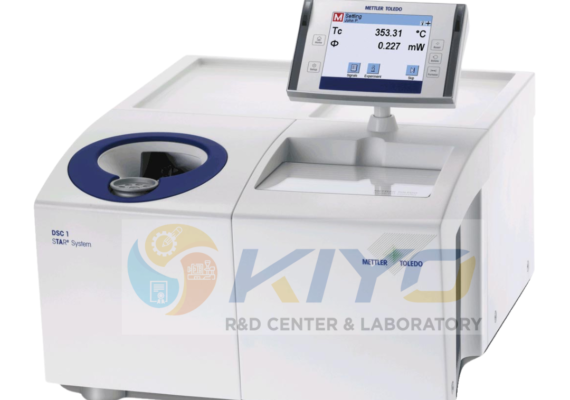
Your guide to choosing the right polymer test at Kiyo R&D Lab
All three are staples of polymer analysis, but they answer different questions. The key to ftir vs dsc vs tga is knowing what each one actually measures.
FTIR (Fourier-transform infrared spectroscopy) identifies what a material is — the base polymer, additives, contaminants, and degradation — from its infrared fingerprint.
DSC (differential scanning calorimetry) measures how it behaves with heat — melting, crystallisation, glass transition, and curing — by tracking heat flow.
TGA (thermogravimetric analysis) measures what it is made of and how stable it is — moisture, filler, and decomposition — by tracking weight change on heating.
Here is ftir vs dsc vs tga at a glance — the clearest way to see where each technique fits.
| Aspect | FTIR | DSC | TGA |
|---|---|---|---|
| Measures | IR absorption | Heat flow | Weight change |
| Answers | What is it? | How does it melt/cure? | What’s it made of? |
| Key outputs | Polymer ID, contaminants | Tg, Tm, Tc, cure, OIT | Filler, ash, decomposition |
| Best for | Identification | Thermal behaviour | Composition & stability |
They are complementary, not competing — many investigations use two or all three together for a complete answer.
Still weighing ftir vs dsc vs tga? Start from your question, not the technique — this table maps common goals to the right test.
| Your Question | Best Test |
|---|---|
| What polymer is this? | FTIR |
| What is contaminating it? | FTIR (+ SEM-EDX) |
| What is its melting / Tg? | DSC |
| Is it fully cured? | DSC |
| How much filler is in it? | TGA |
| At what temp does it break down? | TGA |
| Full picture / unknown sample | All three |
Once you’ve settled the ftir vs dsc vs tga question, Kiyo R&D Lab in Chennai (Chrompet & Oragadam) can run whichever you need — or all three together for a complete polymer profile — with recognised methods and clear reporting.
Not sure which test your polymer needs? Describe your material and your question, and we’ll recommend FTIR, DSC, TGA, or a combination.
Call 90420 86986 Request a QuoteExplore all our capabilities at www.kiyorndlab.com.
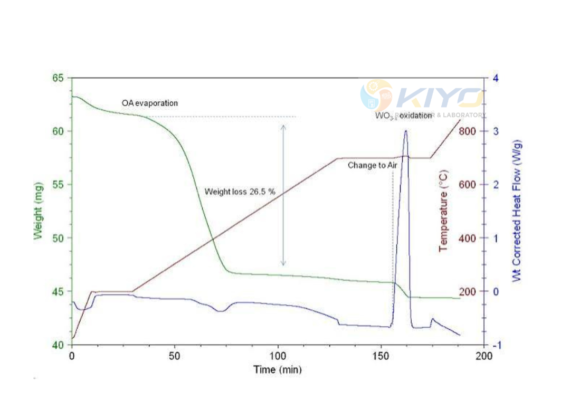
Understanding ftir vs dsc vs tga comes down to one thing: start from your question. FTIR for identity, DSC for thermal behaviour, TGA for composition — and all three together when you need the full picture.
When you know which you need — or want us to help you decide — the team at Kiyo R&D Lab in Chennai is ready. Reach out today and turn your polymer into a clear, audit-ready answer.