
You have probably seen the term everywhere, but what does an r&d lab actually do day to day? Research and development labs are where ideas are tested against reality — where materials are characterised, products are validated, and problems are traced to their root. This guide explains the role of an R&D lab in plain terms, the work that happens inside one, and how a testing-focused R&D lab like Kiyo supports manufacturers and innovators.
Whether you are a manufacturer, a startup, or simply curious, understanding what does an r&d lab do helps you know when and how to use one.

A clear guide to R&D labs from Kiyo R&D Lab
A research and development lab is a facility where new products, materials, and processes are investigated, tested, and improved. Research explores what is possible; development turns that knowledge into something real and reliable. So when people ask what does an r&d lab do, the short answer is: it replaces guesswork with evidence at every stage from idea to finished product.
R&D labs come in many forms — from drug discovery to electronics — but a large share of everyday R&D work is materials and product testing: measuring how a material performs, confirming it meets specification, and finding out why something failed. That is the kind of R&D lab most manufacturers rely on.
To really answer what does an r&d lab do, it helps to break the work into its core functions.
| Function | What It Involves |
|---|---|
| Material characterisation | Measuring what a material is & how it behaves |
| Product testing | Checking performance against spec |
| Development support | Guiding material & design choices |
| Quality & compliance | Proving standards are met |
| Failure investigation | Finding the root cause of problems |
Strength, stiffness, toughness.
Behaviour with heat.
Composition & identity.
Density, hardness, more.
Why a part failed.
Clear, documented results.
Knowing what does an r&d lab do is most useful when you can spot the moments you need one.
In each case, an R&D lab turns a question into documented evidence — which is the practical answer to what does an r&d lab do, and exactly what a testing-focused lab is built to do.
Kiyo R&D Lab is a materials and product testing R&D lab based in Chennai (Chrompet & Oragadam). If you now understand what does an r&d lab do and need one for your material or product, we bring mechanical, thermal, and analytical testing together under one roof, with clear reporting and courier-friendly collection.
Have a material or product that needs testing, developing, or investigating? Tell us your goal and we’ll recommend the right approach.
Call 90420 86986 Request a QuoteExplore all our capabilities at www.kiyorndlab.com.
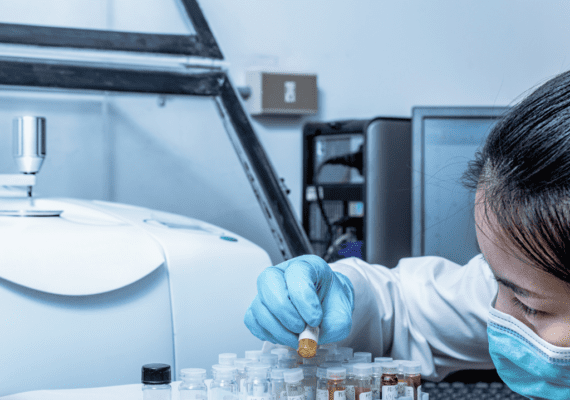
So, what does an r&d lab do? It turns ideas, materials, and problems into documented evidence — through research, testing, development, and analysis. For most manufacturers, that means a materials and product testing lab that confirms quality and solves problems.
If you have a material or product that needs testing, developing, or investigating, the team at Kiyo R&D Lab in Chennai is ready to help. Reach out today and put evidence behind your decisions.